


Morocco Packing List 2026: What to Wear & Ultimate Travel Checklist
Planning a trip to Morocco in 2026? Knowing what to wear in Morocco can make your journey more comfortable, especially when you are moving between busy medinas, coastal cities, mountain villages, and the Sahara Desert.
For most sightseeing days, pack breathable clothing that covers the shoulders and knees, comfortable walking shoes, sunglasses, a light layer, and a scarf. Your exact packing list should change according to the season, destination, and activities on your itinerary.
Morocco combines warm sunny days with cooler mornings and evenings, while the mountains and desert can experience much larger temperature changes. A thoughtful Morocco packing list therefore needs to work for several different environments.
Whether you are arriving by ferry from Spain to Tangier, exploring historic medinas, or joining a Tangier to Merzouga Tour , this guide explains what to pack, how to dress respectfully, which shoes to bring, and what to leave at home.
What to Wear in Morocco: Dress Code & Cultural Tips
Morocco is accustomed to international visitors, and tourists generally have plenty of freedom when choosing what to wear. However, clothing that is comfortable and moderately modest is usually the easiest choice when visiting traditional neighborhoods, historic medinas, rural communities, and cultural sites.
You do not need to dress exactly like a Moroccan local. Instead, think about choosing practical clothing that respects the local environment while allowing you to stay cool and comfortable.
What to Wear in Morocco for Women
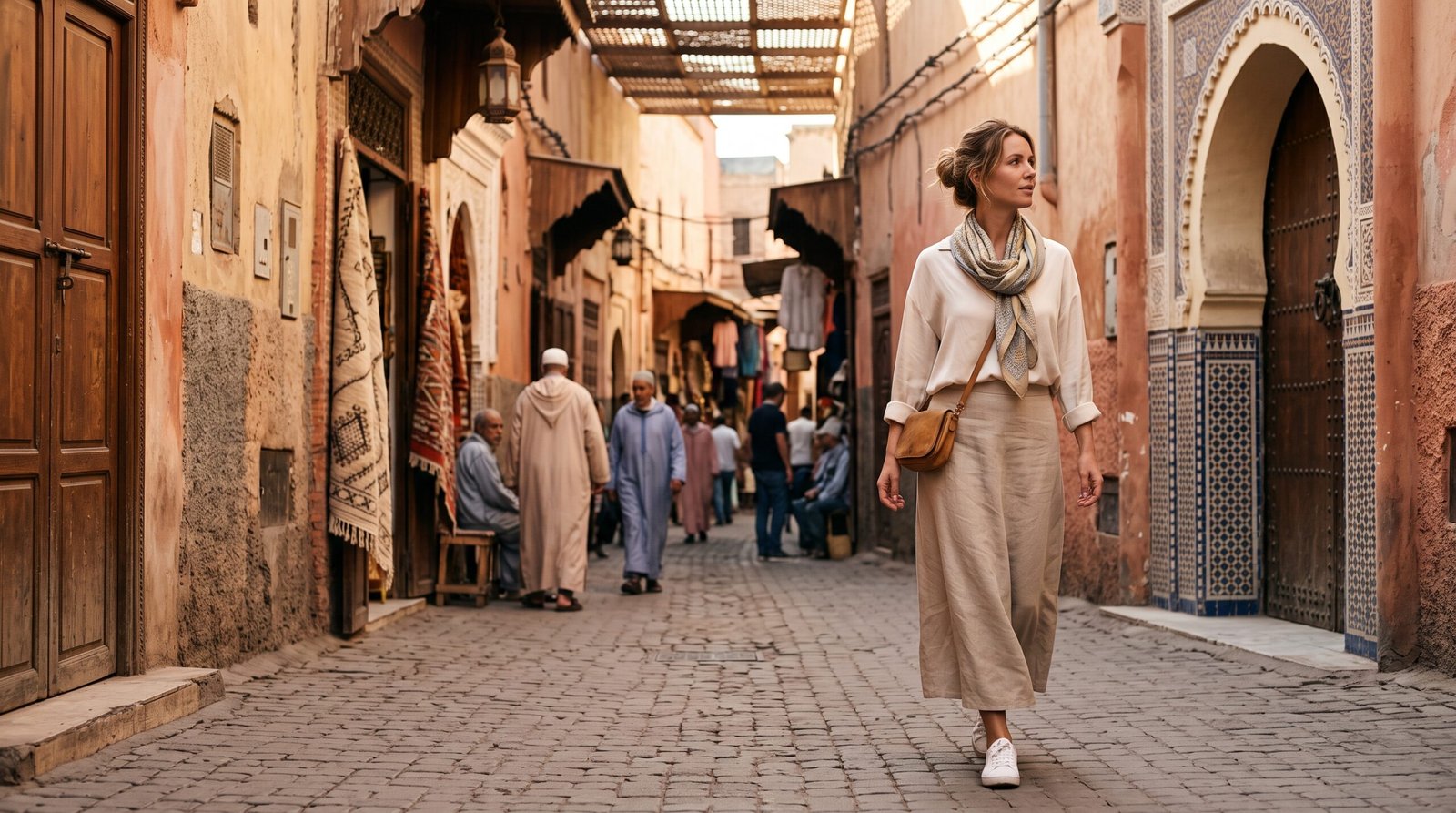
Lightweight maxi or midi dresses, loose trousers, cotton tops, linen shirts, and skirts around the knee or longer are practical choices for sightseeing. A scarf is useful when you want an extra layer of coverage.
What to Wear in Morocco for Men
Lightweight trousers, chinos, linen pants, polo shirts, cotton T-shirts, and breathable button-down shirts work well for most city and sightseeing days.
Cultural & Religious Sites
When visiting religious or particularly traditional spaces, choose clothing that covers the shoulders and knees and follow any specific instructions displayed at the site.
What Should a Female Traveler Wear in Morocco?
Women visiting Morocco do not generally need to wear a headscarf in everyday public spaces. For city sightseeing, loose-fitting trousers, long skirts, midi dresses, breathable tops, and lightweight layers are comfortable options.
In crowded medinas, practical clothing can also make walking easier. Consider a cross-body bag with a secure zip and clothing that allows you to move comfortably through narrow streets and busy markets.
What to Wear in Morocco for Men
Men can keep their travel wardrobe simple: lightweight trousers, breathable shirts, polo shirts, comfortable T-shirts, and a light jacket for cooler evenings.
Shorts are common in beach destinations and tourist areas, but longer trousers are often a more versatile choice if your itinerary includes medinas, rural areas, cultural attractions, and nicer restaurants.
What Not to Wear in Morocco
Knowing what not to wear in Morocco is just as useful as knowing what to pack. You do not need a completely different wardrobe, but very revealing clothing can feel less comfortable in traditional neighborhoods and rural areas.
Short clothing is more appropriate for beaches, resorts, and private settings. For everyday sightseeing, knee-length or longer options are generally easier and more versatile.
Extremely low necklines, sheer tops without a layer underneath, and clothing that leaves the midriff completely exposed may attract more attention in traditional areas.
Swimsuits and beachwear are best kept around pools, beaches, and private resort areas. Put on a cover-up before walking into streets, hotel lobbies, restaurants, or local shops.
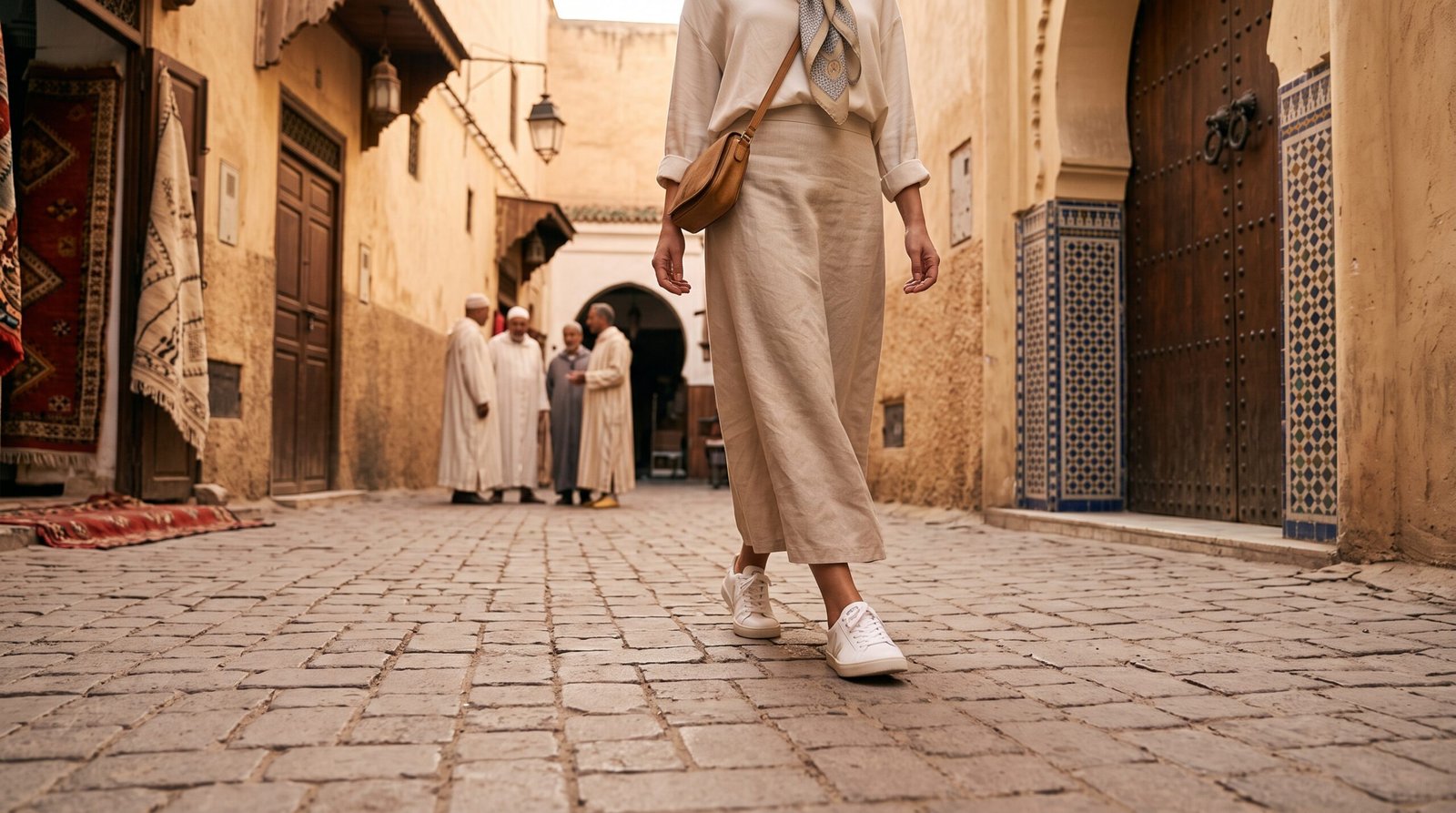
Fashion shoes that are difficult to walk in can become a problem on long sightseeing days. Uneven pavements and historic medina streets make supportive footwear much more practical.
What Shoes to Pack for Morocco
Comfortable footwear is one of the most important parts of your Morocco packing list. Exploring a medina, walking through a souk, climbing viewpoints, or visiting archaeological sites can involve many hours on your feet.
Walking Sneakers
Bring one comfortable pair of broken-in walking sneakers with good grip. They are suitable for city sightseeing, medina walks, day trips, and many desert activities.
Supportive Sandals
Comfortable sandals are useful in warm weather, especially in coastal destinations and relaxed hotel environments. Choose a pair with good support rather than thin flip-flops.
Hiking Shoes
Hiking footwear is worthwhile if your itinerary includes serious mountain trails or longer hikes. For normal desert sightseeing, heavy hiking boots are usually unnecessary.
What to Pack by Destination
The best way to pack for a trip to Morocco is to consider your itinerary rather than the country as one single climate. Tangier, Marrakech, the Atlas Mountains, and the Sahara can require noticeably different clothing and equipment.
Sahara Desert & Merzouga
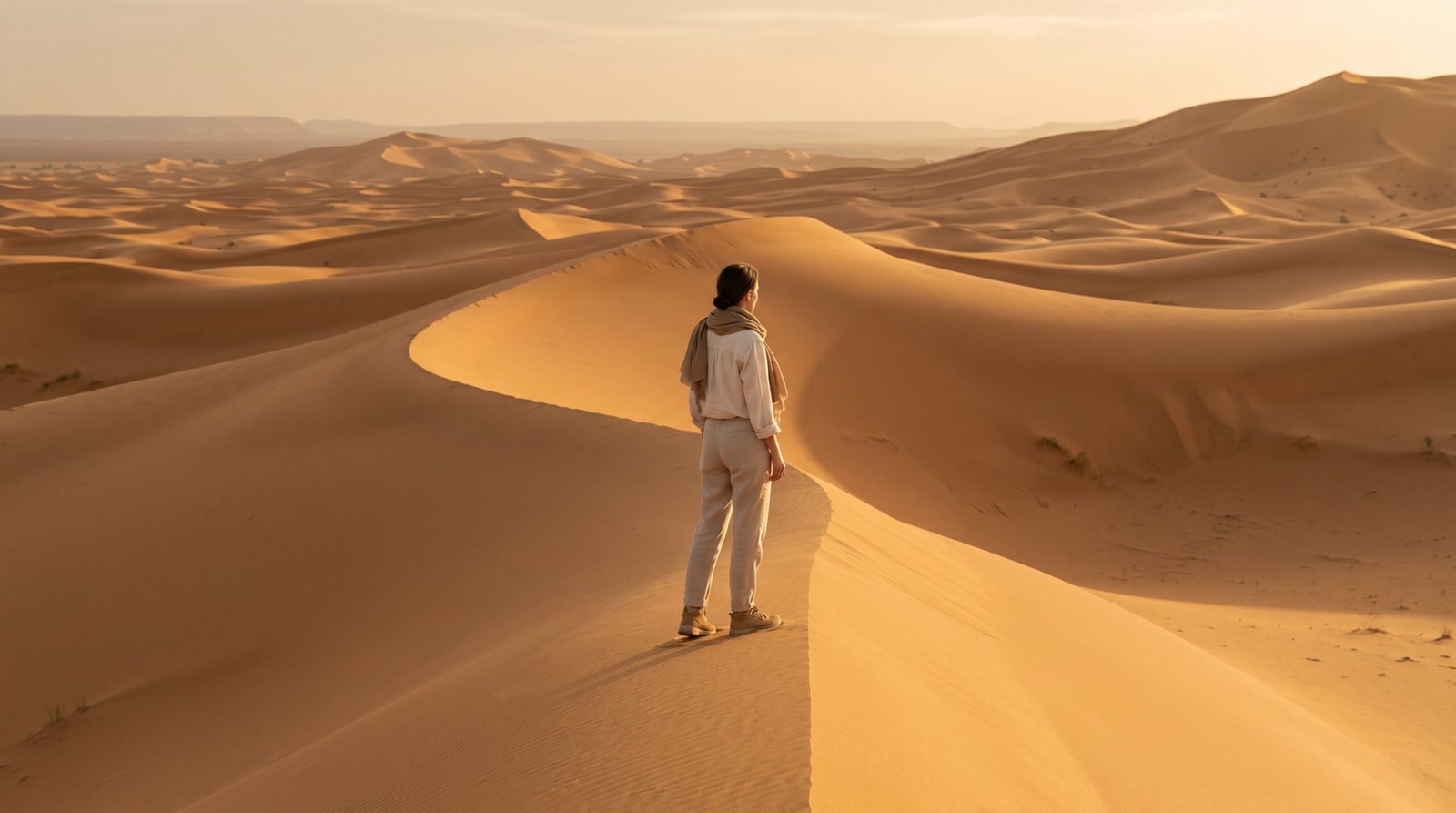
For Merzouga and Erg Chebbi, choose loose, breathable clothing during the day. Long trousers are comfortable for camel trekking and protect your legs from the sun and friction from the saddle.
Bring sunglasses, sunscreen, a hat or scarf, and closed-toe shoes for walking on the dunes. Desert temperatures can fall considerably after sunset, so pack a warm layer and suitable sleepwear.
If a Sahara experience is part of your itinerary, our Camel Trekking in Merzouga Guide explains what to expect during a desert excursion.
High Atlas Mountains
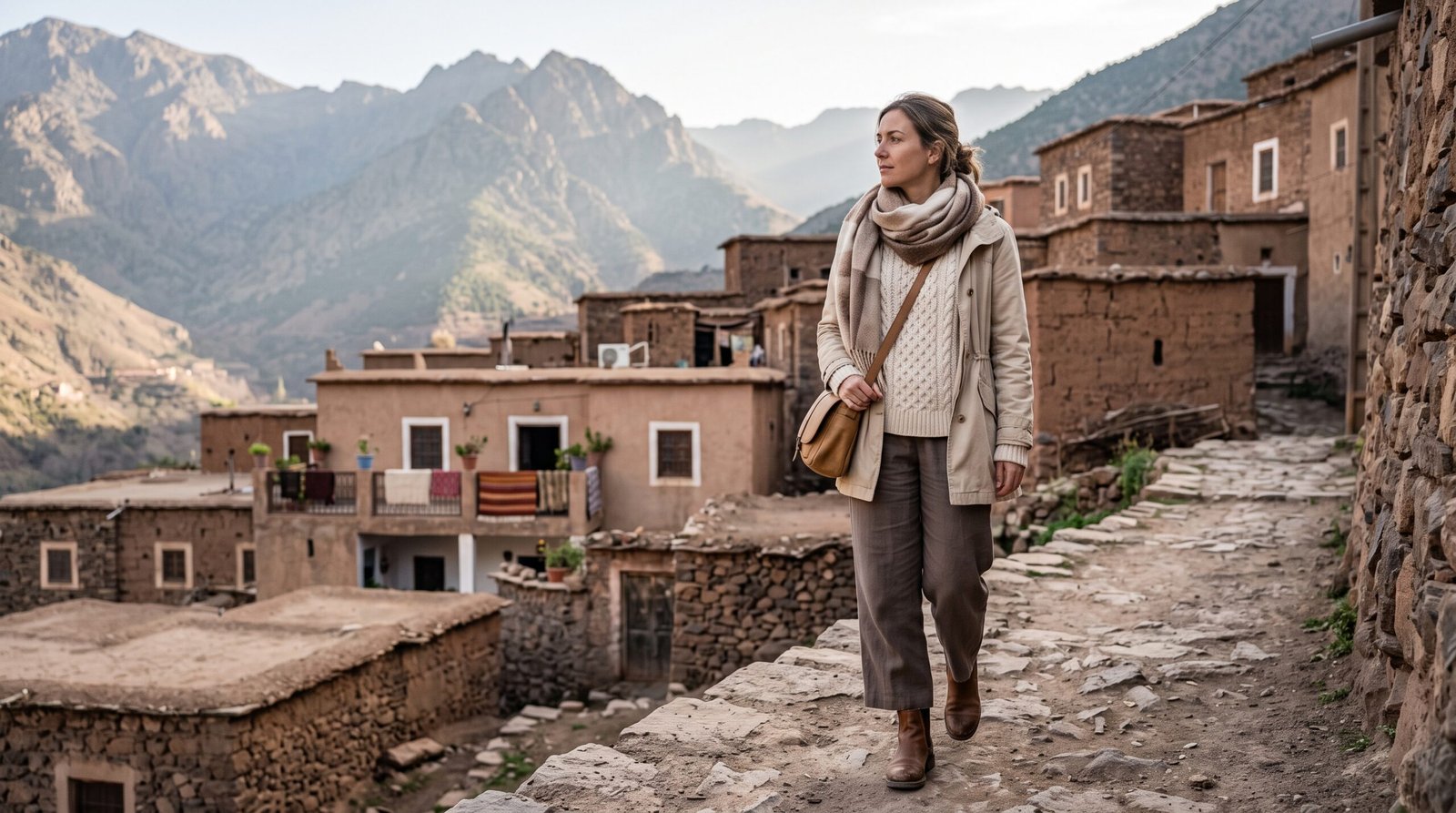
Mountain conditions can be cooler than nearby cities, especially early in the morning and after sunset. Pack layers that you can easily add or remove during the day.
For proper hiking, bring sturdy trail shoes or hiking boots, moisture-managing socks, a lightweight waterproof or windproof layer, and enough water for the planned route.
Tangier, Chefchaouen & the Coast
Northern Morocco can feel more Mediterranean and coastal. Tangier and other northern destinations may have cooler evenings and breezier conditions than inland cities.
Pack breathable daywear, comfortable walking shoes, sunglasses, and a light cardigan or jacket. If you are visiting Chefchaouen, comfortable footwear is particularly useful because the town includes slopes and uneven streets.
For more ideas for northern Morocco, explore our Morocco tour options from Tangier .
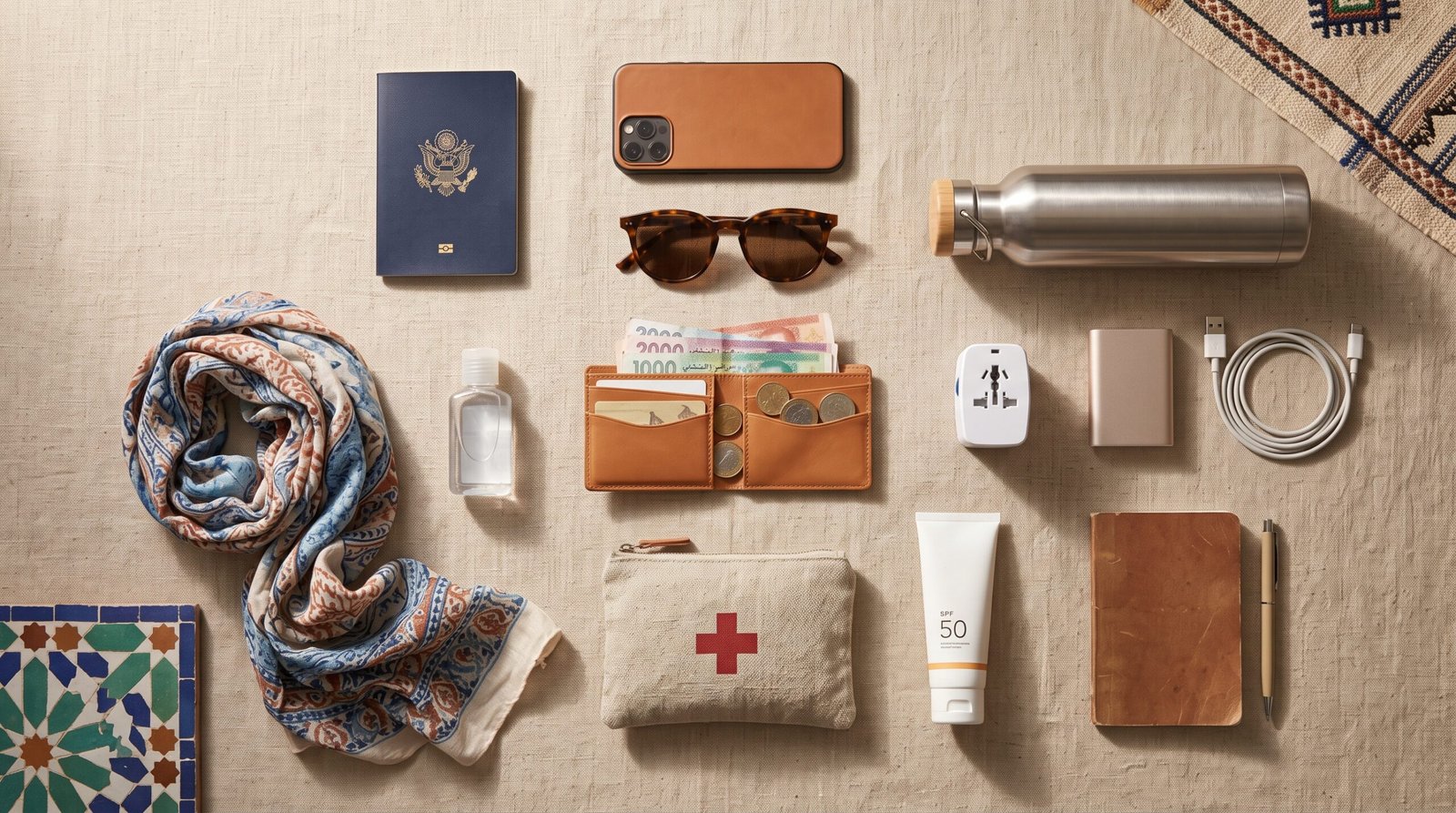
Check our Best Time to Visit Morocco Guide for seasonal information before finalizing your Morocco packing list.
Pack Your Bags — We Handle the Rest
Travel between Morocco's cities, mountains, and desert in comfort with a private itinerary, professional driver, and door-to-door transportation.
Plan Your Custom Morocco TourWhat to Pack for Morocco by Season
Your seasonal packing list should reflect both daytime temperatures and the possibility of cooler mornings and evenings. Desert and mountain destinations usually require more layering than coastal cities.
| Season | Months | Typical Packing Focus | Useful Items |
|---|---|---|---|
| Spring | March – May | Mild to warm days with cooler mornings and evenings. | Light layers, trousers, dresses, walking shoes, light jacket and compact rain layer. |
| Summer | June – August | Hotter inland conditions and generally milder coastal conditions. | Lightweight linen or cotton, sun hat, sunglasses, sunscreen and breathable shoes. |
| Autumn | September – November | Warm days gradually becoming cooler, especially later in the season. | Breathable clothing, light sweater, scarf, trousers and comfortable walking shoes. |
| Winter | December – February | Cooler days, cold evenings and much colder conditions in desert and mountain areas. | Warm jacket, layers, long trousers, closed shoes, warm socks and rain protection. |
Morocco Travel Essentials Beyond Clothing
Clothing is only one part of a practical Morocco packing list. These small travel essentials can make long sightseeing days and road trips much easier.
Plug Adapter
Morocco uses European-style Type C and Type E electrical sockets and a 220V supply. Travelers whose devices use different plugs should bring a compatible adapter.
Power Bank
A compact power bank is useful during long day trips, road journeys, desert excursions, and full days of sightseeing when you may not have easy access to a socket.
Tissues & Hand Sanitizer
Keep a small pack of tissues and hand sanitizer in your day bag for road stops, markets, excursions, and public facilities.
Personal Travel Kit
Bring your regular personal medication, sunscreen, basic first-aid supplies, and any travel products you normally use. Keep essential medication in your carry-on.
Cards & Moroccan Dirhams
Cards are accepted at many hotels, restaurants, and larger businesses, while cash remains useful for small purchases, some taxis, tips, markets, and local shops.
Secure Day Bag
A comfortable cross-body bag with a secure closure is practical for carrying your phone, passport copy, wallet, tissues, sunscreen, and other daily essentials.
What Not to Pack for Morocco
Packing light can make Morocco easier to navigate, especially when your itinerary includes trains, private transfers, medina walks, and desert camps.
Avoid filling your suitcase with too many heavy items. A small collection of versatile layers can cover most Morocco itineraries.
Leave unnecessary expensive jewelry and other valuables at home. Simple accessories are easier to travel with and attract less attention.
High heels are rarely practical for medina walks, uneven streets, desert excursions, or long sightseeing days. Save dressier footwear for specific evening occasions.
Drone import and use are subject to Moroccan restrictions. If you plan to travel with a drone, check the current official authorization and customs requirements before departure rather than assuming it can be brought into the country.
Ultimate Morocco Packing Checklist
Use this checklist as a starting point for a typical 7–10 day trip. Adjust the quantities according to your itinerary, laundry access, season, and whether you are visiting the Sahara or mountains.
| Category | Recommended Items | 7–10 Day Trip |
|---|---|---|
| Clothing | Breathable T-shirts, blouses, linen shirts, trousers, skirts or dresses. | 7–10 mixed outfits |
| Layers | Light cardigan, sweater, scarf and one warmer jacket depending on season. | 1–3 layers |
| Footwear | Walking sneakers plus supportive sandals. Hiking shoes only if your itinerary requires them. | 2 pairs usually enough |
| Sahara | Loose trousers, warm evening layer, sunglasses, scarf, sunscreen and closed shoes. | 1 desert outfit + layers |
| Sun Protection | Sunscreen, sunglasses, hat and lip protection. | 1 travel kit |
| Toiletries | Personal toiletries, tissues, hand sanitizer and personal medication. | Travel-size kit |
| Electronics | Phone, chargers, Type C/E adapter, power bank and camera equipment if needed. | 1 compact kit |
| Documents | Passport, travel documents, insurance information and digital backups. | Physical + digital copies |
Frequently Asked Questions About What to Pack for Morocco
What should I wear in Morocco as a female traveler?
For everyday sightseeing, comfortable and moderately modest clothing works well. Consider loose trousers, midi or maxi dresses, breathable tops, lightweight shirts, and a scarf or light layer. You generally do not need to cover your hair in ordinary public spaces.
Can female tourists wear shorts in Morocco?
Shorts are possible, particularly in beach destinations, resorts, and more tourist-oriented areas. However, longer shorts, skirts, trousers, or dresses are often more versatile for visiting medinas, rural communities, and cultural attractions.
Can I wear a bikini or swimsuit in Morocco?
Yes. Swimsuits and bikinis are commonly worn at hotel pools, private riads, beach clubs, and appropriate beach areas. Use a cover-up when leaving the pool or beach environment and entering streets, restaurants, or public indoor spaces.
What should I wear for camel trekking in Merzouga?
Wear loose trousers or other comfortable long clothing, a breathable top, closed-toe shoes, sunglasses, sunscreen, and a scarf or head covering for sun and wind protection. Bring a warm layer if your excursion includes the evening or an overnight desert camp.
Do I need hiking boots for the Sahara Desert?
Heavy hiking boots are usually unnecessary for standard camel trekking and dune walks. Comfortable closed-toe walking shoes or sneakers are generally sufficient. Proper hiking footwear becomes more useful for rocky terrain or longer mountain hikes.
What type of electrical plug is used in Morocco?
Morocco commonly uses Type C and Type E electrical sockets with a 220V supply. Travelers whose devices use different plug designs should bring an appropriate travel adapter.
What should I pack for a 7-day trip to Morocco?
A practical 7-day Morocco packing list can include around 5–7 tops, 3–4 bottoms, one or two dresses or alternative outfits, two pairs of comfortable shoes, a light layer, a scarf, underwear, toiletries, sun protection, electronics, travel documents, and any destination-specific gear.
Should I bring a scarf to Morocco?
A lightweight scarf is one of the most useful accessories to pack. It can provide extra coverage, protect you from sun and wind, and add warmth during cooler evenings. It is especially useful during desert excursions.
Experience Morocco in Comfort with Yalla Tours
Now that your suitcase is ready, let our local team take care of the logistics. From private city tours and comfortable transfers to Sahara desert experiences, we can help you build a Morocco itinerary around your schedule and travel style.