


The Ultimate Moroccan Food Guide: What to Eat in Tangier & Beyond
Welcome to the ultimate Moroccan food guide. If you are planning a trip to Morocco, discovering the country's food culture can be just as memorable as visiting its historic cities, mountains, beaches, and deserts. Moroccan cuisine combines Amazigh, Arab, Andalusian, Mediterranean, and African influences into a rich culinary tradition built around fresh ingredients, aromatic spices, slow cooking, and generous hospitality.
From traditional family kitchens and bustling Medina food stalls to seafood restaurants overlooking the Strait of Gibraltar, food is an essential part of the Moroccan travel experience. Meals are often shared, enjoyed slowly, and accompanied by the country's famous mint tea.
If you are wondering what to eat in Tangier, you are in the right place. Tangier has its own distinctive food culture shaped by its location in northern Morocco and its historic connections with the Mediterranean, Andalusia, and the wider Atlantic world.
In this complete Moroccan food guide, we will cover the most famous traditional Moroccan dishes, the best foods to try in Tangier, Moroccan street food, dining etiquette, food safety tips, typical meal prices, and how a private culinary experience can help you discover authentic local flavors.
If you would like to combine sightseeing with local food experiences, explore our Tangier private tours and ask our local team to include culinary experiences in your itinerary.
1. The Pillars of Moroccan Cuisine
Moroccan cuisine is much more than a collection of famous dishes. It reflects centuries of cultural exchange and a strong tradition of home cooking. Fresh vegetables, olive oil, grains, meat, seafood, herbs, preserved foods, and aromatic spices form the foundation of many Moroccan meals.
The Magic of Moroccan Spices
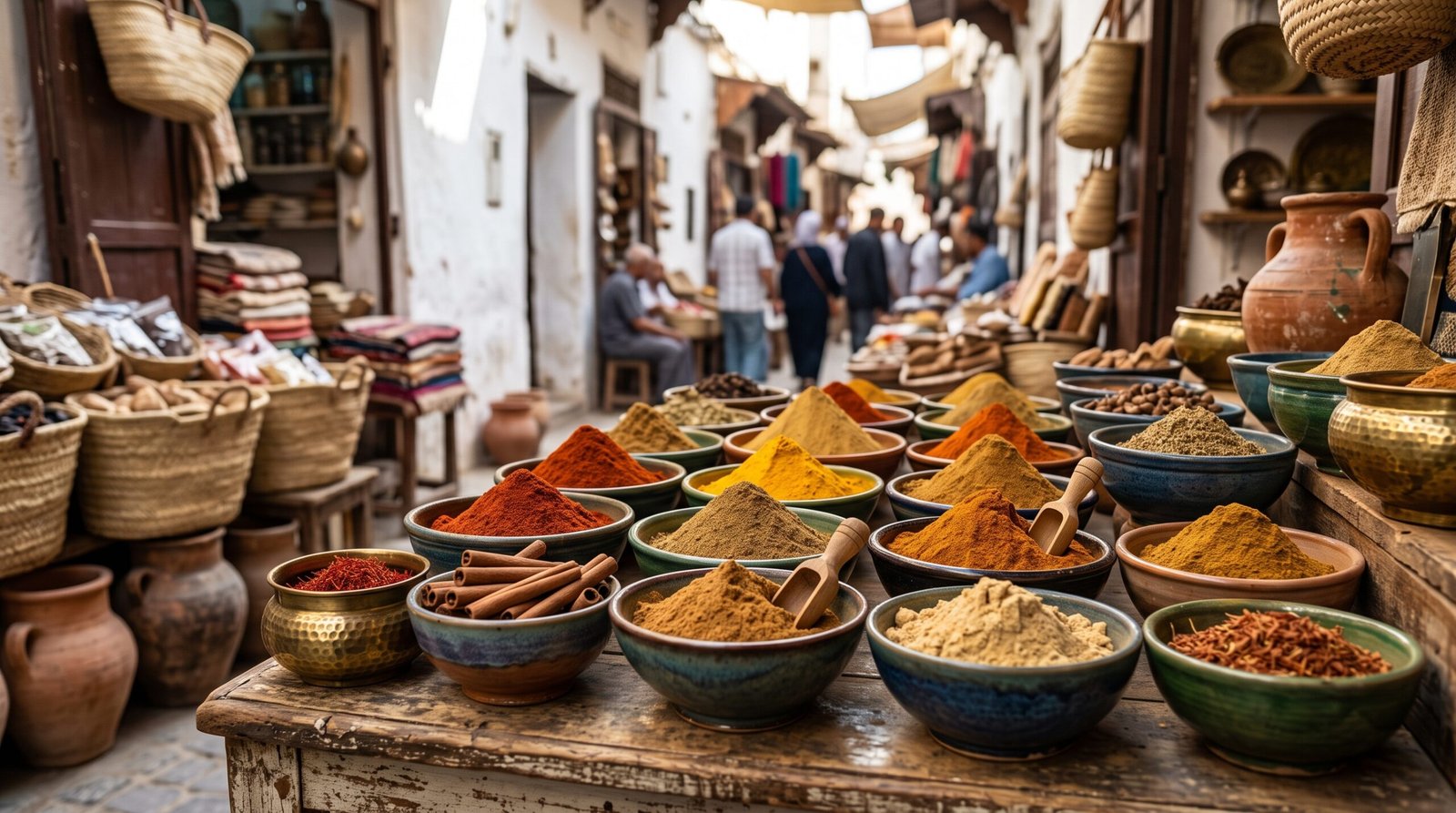
Spices are central to Moroccan cooking. Cumin, ginger, turmeric, paprika, cinnamon, saffron, and black pepper are frequently used to create layers of flavor rather than simply adding heat.
One of the best-known Moroccan spice blends is Ras el Hanout. Its exact ingredients vary between spice merchants and recipes, but it is generally associated with a complex combination of warm and aromatic spices.
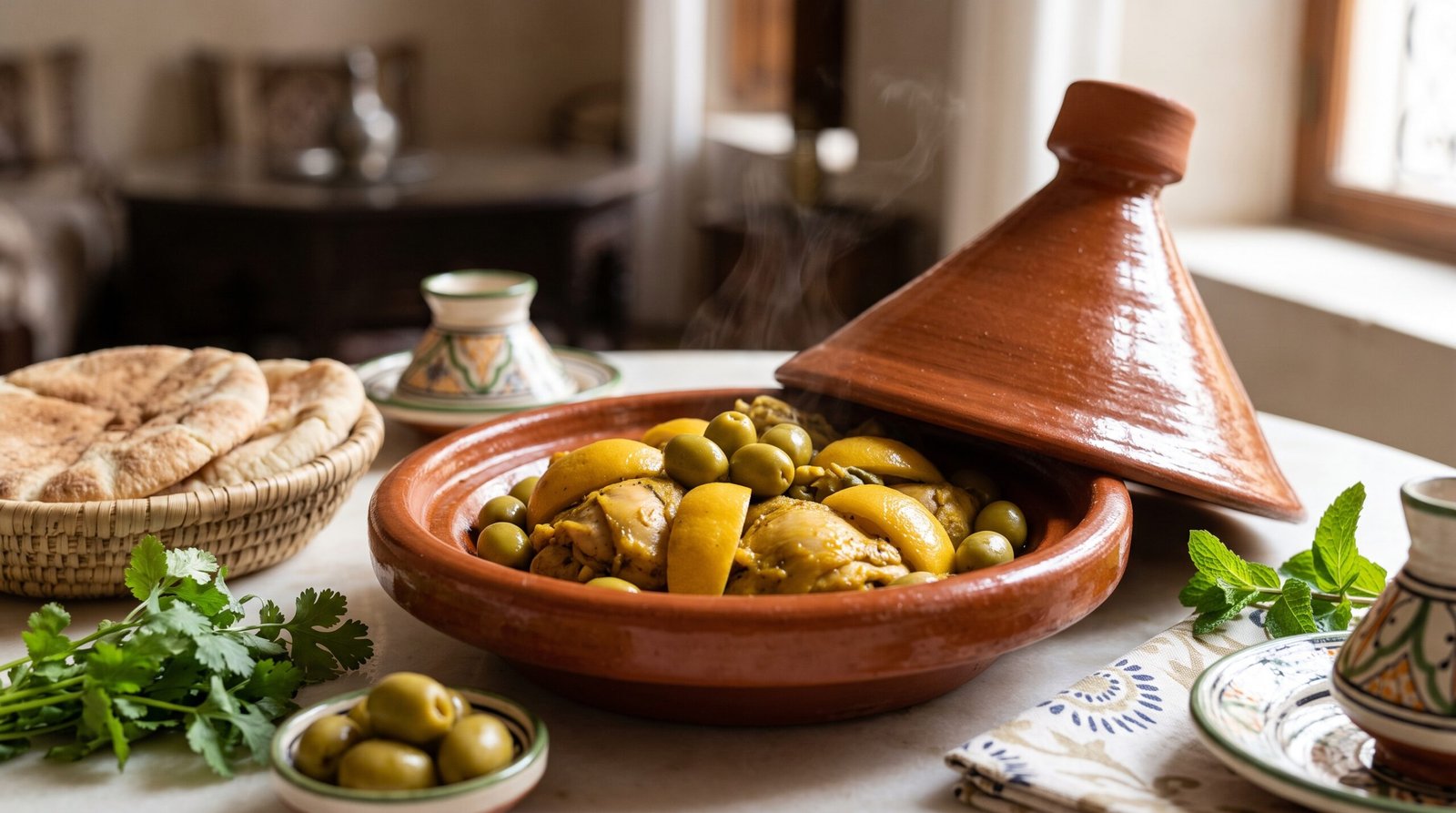
Preserved lemons and olives are also important ingredients, particularly in northern Moroccan and Moroccan coastal cooking. They add a distinctive salty, tangy flavor to dishes such as chicken tagine.
Khobz, the traditional round Moroccan bread, is served with many meals. It can be used to scoop up food from a shared dish and is also commonly enjoyed with salads, soups, tagines, and other Moroccan dishes.
2. Traditional Moroccan Dishes You Must Try
Whether you are visiting Tangier, Chefchaouen, Fes, Marrakech, or the Sahara, several classic Moroccan dishes are worth trying during your trip.
Tagine (Tajine)
Tagine refers both to the traditional cooking vessel and to the slow-cooked dish prepared inside it. The conical lid helps retain moisture while the ingredients cook gently over time.
Popular combinations include chicken with preserved lemons and olives, lamb or beef with prunes and almonds, and vegetable tagines prepared with seasonal produce.
Couscous
Couscous is one of Morocco's best-known dishes and is traditionally associated with Friday family meals. Moroccan couscous is usually served with vegetables and a flavorful broth, with variations using chicken, beef, lamb, or vegetables.
Pastilla (Bastilla)
Pastilla is a delicate savory-sweet pie made with thin pastry and a filling that may include chicken, almonds, onions, eggs, and aromatic spices. It is particularly associated with the culinary traditions of northern Morocco and Fes.
Zaalouk
Zaalouk is a cooked eggplant and tomato salad seasoned with garlic, cumin, paprika, olive oil, and herbs. It is commonly served as part of a selection of Moroccan salads and is an excellent vegetarian option.
Harira
Harira is a hearty Moroccan soup traditionally prepared with tomatoes, legumes, herbs, spices, and sometimes meat. It is especially popular during Ramadan but can be enjoyed throughout the year.
3. What to Eat in Tangier: Northern Moroccan Specialties
Tangier is one of the best places in Morocco to experience the country's northern food culture. Its position between the Atlantic Ocean and Mediterranean Sea, combined with centuries of Mediterranean and Andalusian connections, has helped shape a culinary scene where seafood, street food, Moroccan home cooking, and café culture all come together.
Fresh Seafood
Seafood is one of the highlights of eating in Tangier. Depending on the season and restaurant, you may find grilled or fried fish, calamari, prawns, sardines, and other fresh catches from the surrounding waters.
Bissara
Bissara is a comforting northern Moroccan soup made primarily from dried fava beans and seasoned with olive oil, cumin, and paprika. It is particularly popular as a simple and filling breakfast.
Kalinti
Kalinti is a popular northern Moroccan street food made from chickpea flour and baked into a soft, savory snack. It is commonly served warm and seasoned with cumin.
What to Eat in Tangier's Medina
Tangier's historic Medina is an excellent place to discover Moroccan flavors on foot. Small bakeries, cafés, food stalls, traditional restaurants, and local markets offer opportunities to try everything from fresh bread and pastries to soups, salads, tagines, and seafood.
For first-time visitors, exploring the Medina with a knowledgeable local guide can make it easier to understand what you are eating, where particular dishes come from, and how local food traditions fit into Tangier's history.
Taste Tangier Like a Local
Discover the flavors of Tangier beyond the typical tourist menu. Our local guides can combine historic sightseeing with carefully selected food stops, traditional bakeries, cafés, markets, and authentic Moroccan dining experiences.
Plan Your Tangier Food Experience4. Essential Moroccan Street Food & Snacks
Some of the most memorable Moroccan food experiences happen outside traditional restaurants. Street food is an important part of everyday life, especially in busy markets and neighborhood areas.
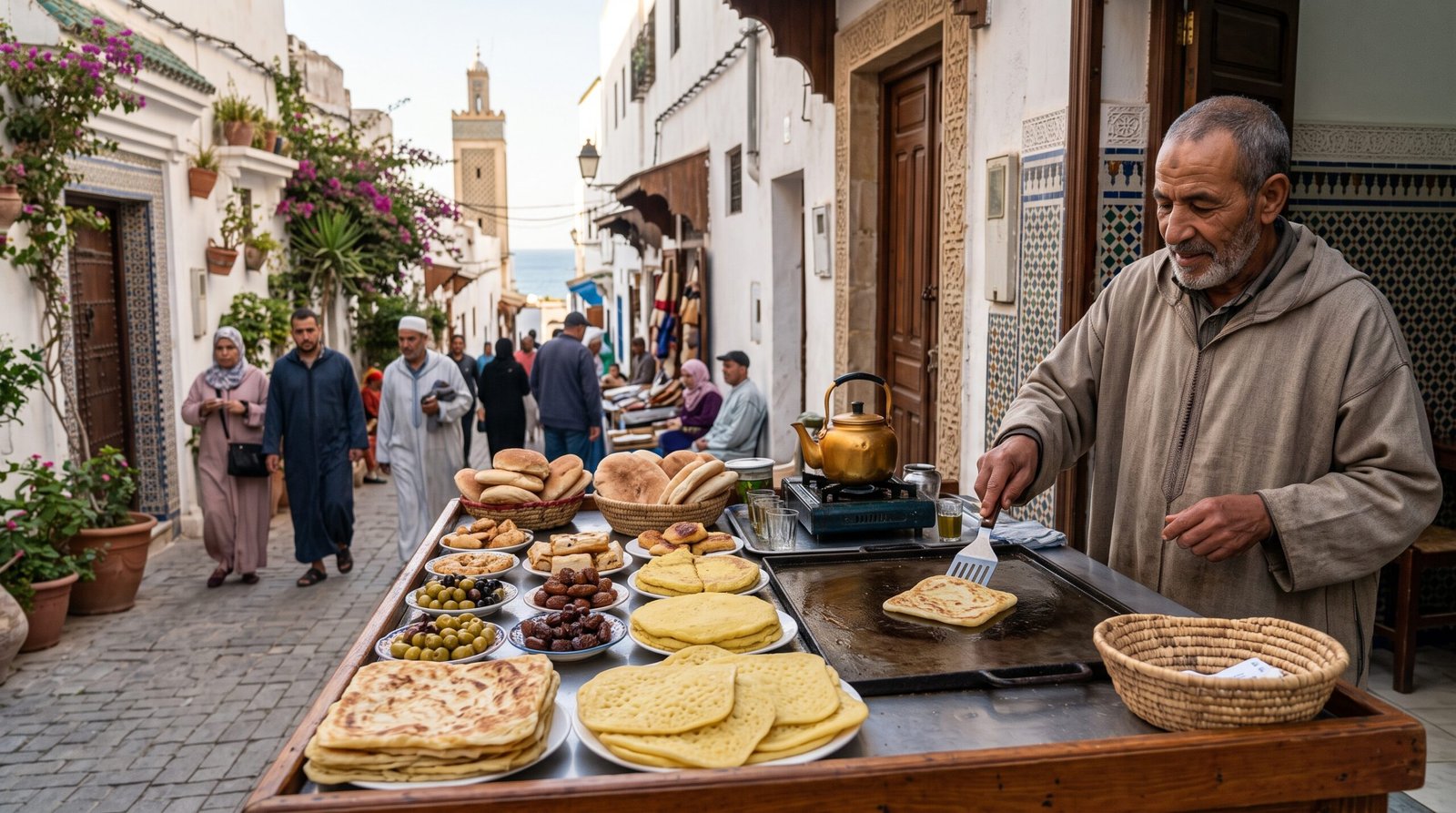
A square, layered Moroccan flatbread that is commonly enjoyed for breakfast or as a snack. It can be served with honey, butter, cheese, or savory ingredients.
Known for its small holes, baghrir is a soft semolina pancake often served warm with honey and butter.
Sfenj is a Moroccan fried doughnut with a crisp exterior and soft, chewy center. It is best enjoyed fresh from the fryer.
Maakouda are fried potato patties seasoned with herbs and spices. They are commonly enjoyed as a snack or inside sandwiches.
Mint tea is one of Morocco's most recognizable hospitality traditions. Green tea is combined with fresh mint and sugar and served throughout the day, particularly when welcoming guests.
5. What Does a Typical Food Day in Tangier Look Like?
One of the best ways to experience Moroccan cuisine is to eat according to the rhythm of local daily life rather than trying to fit every dish into one meal.
Breakfast
Start the day with bissara, msemmen, baghrir, fresh bread, olives, eggs, or Moroccan mint tea. Breakfast options vary from simple neighborhood cafés to traditional bakeries.
Lunch
Lunch is often the main meal of the day. Depending on where you eat, you may find tagine, couscous, grilled meat, Moroccan salads, or fresh seafood.
Afternoon
Afternoon is a perfect time for Moroccan tea, pastries, sfenj, or another light snack while exploring Tangier's cafés and historic streets.
Dinner
Dinner can range from a traditional Moroccan meal in the Medina to grilled seafood, regional specialties, or a more contemporary restaurant experience.
6. How Much Does Food Cost in Morocco?
Morocco offers food options for a wide range of budgets. Prices vary depending on the city, restaurant type, location, ingredients, and dining experience.
| Type of Meal | Typical Price Range |
|---|---|
| Simple breakfast or street food | Approximately €2–€5 |
| Local Moroccan restaurant | Approximately €5–€12 per person |
| Mid-range restaurant | Approximately €12–€30 per person |
| Upscale dining | €30+ per person |
These are general travel-planning ranges rather than fixed prices. Popular tourist areas, upscale restaurants, special menus, seafood restaurants, and luxury properties can cost considerably more.
If you are planning a complete Morocco trip, our 7-Day Morocco Itinerary can help you combine destinations, sightseeing, accommodation, and experiences into one practical travel plan.
7. Moroccan Dining Etiquette & Food Safety Tips
Moroccan meals are often social and communal. Understanding a few basic customs can make your dining experience more comfortable and respectful.
- Use Your Right Hand: When eating a traditional communal meal by hand, use your right hand and take food from the area directly in front of you.
- Share the Meal: Tagines, couscous, salads, and other dishes may be served communally, particularly in traditional settings.
- Accept Hospitality: Moroccan hosts often show hospitality by offering tea, bread, or additional food. Accepting when appropriate is generally considered a warm gesture.
- Take Your Time: Meals are often social occasions rather than something to rush through.
For additional background on Moroccan culinary traditions and dishes, explore Moroccan Cuisine on Wikipedia .
8. Is Moroccan Food Vegetarian-Friendly?
Yes. Travelers who do not eat meat can find plenty of vegetarian options in Morocco. Many traditional meals naturally include vegetables, grains, legumes, and plant-based salads.
Vegetable Tagine
Seasonal vegetables slowly cooked with Moroccan spices make a simple and satisfying vegetarian meal.
Moroccan Salads
Zaalouk, cooked carrots, peppers, tomatoes, and other vegetable salads are often served together as starters or side dishes.
Vegetable Couscous
Couscous prepared with seasonal vegetables is one of the easiest traditional dishes to enjoy without meat.
9. Exploring Moroccan Food Independently vs. Taking a Private Food Tour
You can absolutely explore Moroccan cuisine independently. In fact, trying local cafés and restaurants on your own can be part of the adventure. However, first-time visitors may find it difficult to know which dishes to order, where locals eat, or how different foods connect to the history of the city.
| Exploring Independently | Private Culinary Experience |
|---|---|
| Research restaurants and dishes yourself. | Get local recommendations based on your interests. |
| Discover food by trial and error. | Learn what each dish is and how it fits into Moroccan culture. |
| Spend time searching for suitable local spots. | Follow a planned route through selected food stops. |
| Explore at your own pace. | Combine food experiences with sightseeing and local history. |
With Yalla Tours , travelers can combine a private Tangier sightseeing experience with selected local food stops. This can be especially useful for visitors with limited time who want to experience both the city's history and its culinary culture.
10. Moroccan Food Beyond Tangier
One of the best things about traveling through Morocco is discovering how food traditions change from one region to another.
Chefchaouen
The Rif region around Chefchaouen offers a different atmosphere from the coastal cities, with traditional home-style dishes, local cheeses, breads, and regional products.
Fes
Fes is renowned for its sophisticated culinary traditions and is strongly associated with dishes such as pastilla and a wide range of traditional Moroccan preparations.
Marrakech
Marrakech offers a huge variety of Moroccan dining experiences, from traditional restaurants and market food to modern interpretations of Moroccan cuisine.
The Sahara Desert
A Sahara experience often includes traditional meals prepared at desert camps, giving travelers another opportunity to experience Moroccan hospitality far from the country's major cities.
If you are planning to combine Tangier with Chefchaouen, Fes, Marrakech, and the Sahara, you can explore our Morocco itinerary guide for ideas on how to organize your route.
Frequently Asked Questions About Moroccan Food
Is Moroccan food very spicy?
Moroccan food is generally aromatic and highly seasoned rather than extremely hot. Spices such as cumin, ginger, turmeric, cinnamon, and saffron add flavor and depth. If you enjoy spicy food, you can often ask for chili or harissa on the side.
What should I eat in Tangier?
Some foods worth trying in Tangier include fresh seafood, bissara, kalinti, Moroccan salads, tagine, msemmen, sfenj, and traditional mint tea.
Are there good vegetarian options in Morocco?
Yes. Vegetarian travelers can enjoy vegetable tagines, vegetable couscous, zaalouk, Moroccan salads, bissara, lentil dishes, breads, and other plant-based foods.
How much does a typical meal cost in Morocco?
Simple street food and local meals can be relatively inexpensive, while mid-range and upscale restaurants cost more. As a general planning guide, travelers may spend around €2–€5 for simple food, €5–€12 for a local restaurant meal, and €12–€30 or more for mid-range dining.
Is street food safe to eat in Morocco?
Street food can be an excellent part of a Morocco trip. Choose busy vendors with high food turnover, prefer freshly prepared and thoroughly cooked food, and use normal food-safety precautions.
What is the most famous food in Tangier?
Tangier is particularly known for its seafood and northern Moroccan specialties such as bissara and kalinti. Visitors can also find classic Moroccan dishes including tagine, couscous, Moroccan salads, and traditional pastries.
Is a private food tour in Tangier worth it?
A private food tour can be worthwhile for travelers who want local recommendations, cultural context, and a planned culinary experience without spending time researching restaurants and food stops themselves. It can also be combined with sightseeing in the Tangier Medina and other parts of the city.
Experience the Real Taste of Morocco
From traditional breakfasts and Medina street food to fresh seafood and authentic Moroccan dining, let Yalla Tours help you discover Tangier through its food, history, and local culture.