


Best Time to Visit Merzouga: Weather, Seasons & Sahara Guide
Planning a journey to the golden dunes of Erg Chebbi? Knowing the best time to visit Merzouga can help you choose comfortable temperatures, enjoyable desert activities, and the right type of camp for your trip.
For most travelers, October, November, March, and April offer the most comfortable balance of daytime temperatures, cool evenings, camel trekking conditions, and outdoor desert activities. May and September can also work well if you are comfortable with warmer afternoons.
Merzouga has an arid desert climate with large differences between daytime and nighttime temperatures. Winter can bring mild, sunny afternoons but very cold nights, while July and August can become extremely hot during the middle of the day.
Whether you are traveling south on our Tangier to Merzouga Private Tour , arriving from Marrakech or Fes, or planning an overnight stay at a Merzouga Luxury Desert Camp , this guide explains Merzouga weather month by month, the best seasons for desert activities, night temperatures, sandstorms, stargazing, packing, and practical route planning.
- Merzouga Weather by Month
- Merzouga Weather Month by Month
- When Is the Best Time to Visit Merzouga?
- Best Time for Desert Activities
- Sunrise & Sunset in Merzouga
- Sandstorms, Wind & Chergui
- Best Time for Stargazing & Milky Way Photography
- Is Merzouga Too Hot in Summer?
- What to Pack for Merzouga by Season
- Getting to Merzouga from Tangier
- Frequently Asked Questions
Merzouga Weather by Month: Climate & Temperature Overview
Merzouga experiences a hot desert climate with very little annual rainfall. Temperatures vary significantly throughout the year, making the month you choose especially important if you plan to spend time outdoors on the Erg Chebbi dunes.
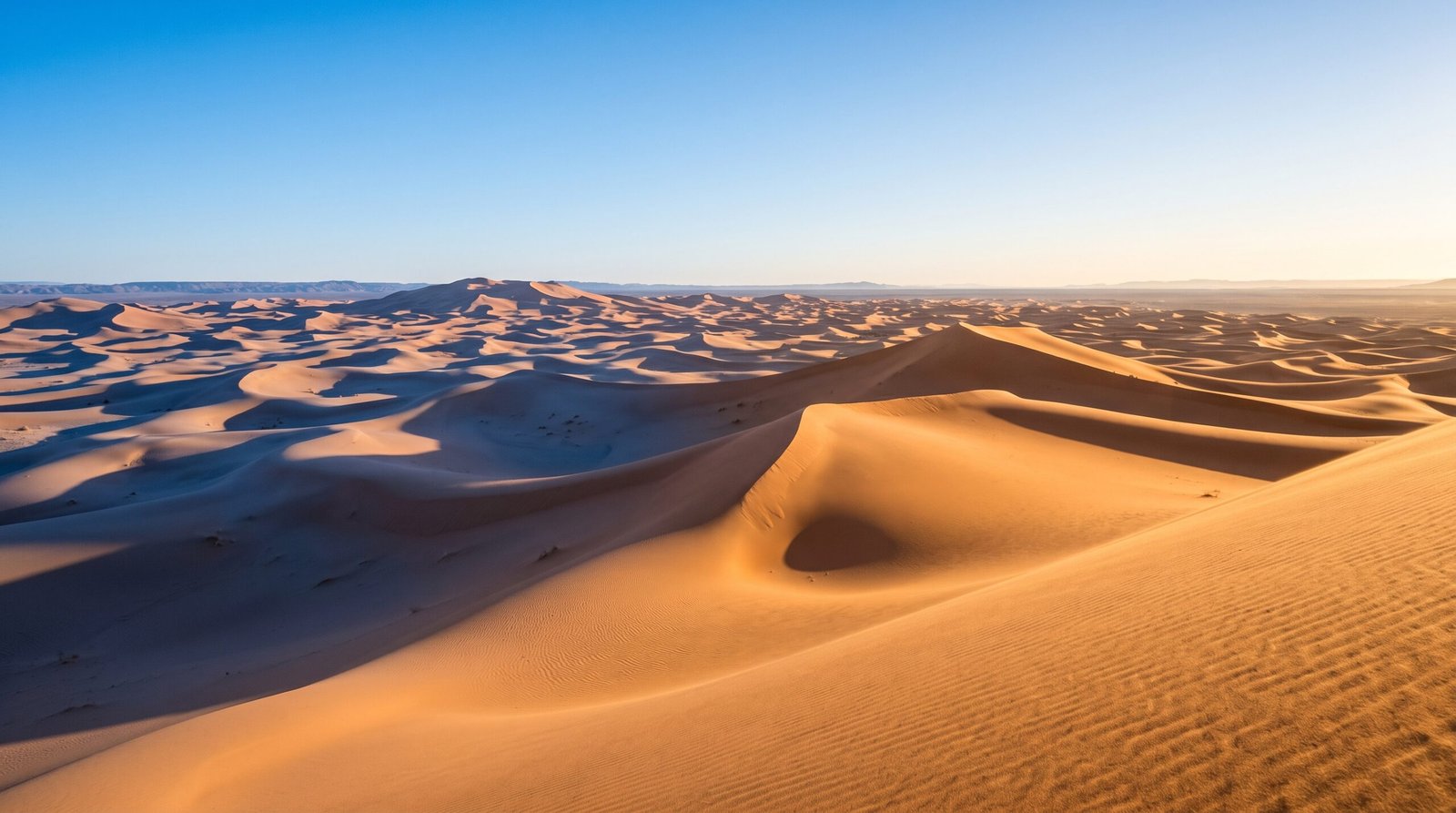
The figures below are approximate climate averages for Merzouga and are intended as a planning guide rather than a daily weather forecast. Actual conditions can vary from one year to another.
| Month | Daytime High | Night Low | Rainy Days | Wind / Sand Risk |
|---|---|---|---|---|
| January | ~17°C / 63°F | ~4°C / 39°F | 0–1 | Low–Moderate |
| February | ~19°C / 67°F | ~6°C / 43°F | 0–1 | Low–Moderate |
| March | ~24°C / 75°F | ~10°C / 50°F | 0–1 | Moderate |
| April | ~29°C / 84°F | ~14°C / 57°F | 0–1 | Moderate |
| May | ~33°C / 91°F | ~18°C / 65°F | 0–1 | Moderate |
| June | ~38°C / 100°F | ~23°C / 73°F | 0 | Low–Moderate |
| July | ~41°C / 106°F | ~26°C / 79°F | 0 | Moderate |
| August | ~40°C / 104°F | ~26°C / 79°F | 0–1 | Moderate |
| September | ~35°C / 95°F | ~21°C / 70°F | 0–1 | Moderate |
| October | ~29°C / 84°F | ~16°C / 61°F | 0–1 | Low–Moderate |
| November | ~22°C / 72°F | ~9°C / 48°F | 0–1 | Low |
| December | ~17°C / 63°F | ~5°C / 41°F | 0–1 | Low |
Climate averages can differ slightly between datasets and years. Temperatures shown here are approximate planning figures for Merzouga.
Merzouga Weather Month by Month
Searching for specific conditions such as Merzouga weather in October or Merzouga weather in April? Here is what to expect during each month of the year.
Merzouga in January
January is one of the coolest periods in Merzouga. Daytime temperatures are generally mild and comfortable for walking on the dunes and exploring the area, but desert nights can become very cold. Pack warm layers if you plan to sleep in a desert camp.
Best for: Sunny winter days, hiking, photography and quiet desert experiences.
Merzouga in February
February gradually becomes warmer during the day, while evenings remain cold. It is a good month for travelers who prefer mild daytime temperatures and don't mind adding warm layers after sunset.
Best for: Dune walks, camel rides and comfortable daytime exploration.
Merzouga in March
March marks the beginning of warmer spring conditions in the Sahara. Afternoon temperatures become comfortable for outdoor activities, while evenings remain pleasantly cool. Wind can occasionally become stronger during spring, so carrying a scarf is useful.
Best for: Camel trekking, hiking, photography and multi-day Sahara tours.
Merzouga in April
April is one of the most comfortable months for visiting Merzouga. Days are warm without the intense summer heat, while evenings are suitable for sitting around a campfire or dining outdoors.
Best for: Camel trekking, luxury desert camps, dune walks, 4x4 excursions and outdoor dinners.
Merzouga in May
May is noticeably warmer than April. Outdoor activities are still possible, but travelers should plan longer excursions around the morning and late afternoon. Evenings are usually much more comfortable than the afternoon.
Best for: Sunrise activities, sunset camel rides and desert camping with good heat management.
Merzouga in June
June brings serious summer heat to the Sahara. Midday outdoor activities can become uncomfortable, so early morning and evening are generally better times for camel rides and dune excursions.
Best for: Sunrise and sunset experiences, stargazing and travelers comfortable with high temperatures.
Merzouga in July
July is among the hottest months of the year in Merzouga. Daytime temperatures can rise above 40°C, making the middle of the day unsuitable for prolonged outdoor activity. If traveling at this time, plan around the cooler parts of the day and choose accommodation suited to summer conditions.
Best for: Early-morning excursions, sunset experiences and clear-sky stargazing.
Merzouga in August
August remains extremely hot during the afternoon, although evenings can be more suitable for outdoor dining and desert activities. Sunrise excursions are particularly important during this period.
Best for: Dawn activities, evening desert experiences and stargazing.
Merzouga in September
September is a transition month. Temperatures begin to fall compared with July and August, but afternoons can still be hot. Travelers who don't mind warm weather can enjoy the desert by scheduling activities around sunrise and sunset.
Best for: Sunset camel rides, evening dinners and late-summer desert experiences.
Merzouga in October
October is one of the most popular periods for visiting Merzouga because temperatures become much more comfortable after the summer heat. The weather is well suited to camel trekking, dune walks and overnight desert camping.
Best for: Camel trekking, luxury glamping, 4x4 tours, photography and outdoor dining.
Merzouga in November
November brings cool daytime temperatures and increasingly chilly nights. The cooler afternoons make outdoor exploration comfortable, while warm layers become important after sunset.
Best for: Camel trekking, hiking, cultural excursions and comfortable daytime desert exploration.
Merzouga in December
December offers mild winter sunshine during the day but cold nights in the desert. A well-equipped camp and warm clothing can make an overnight Sahara experience comfortable even during the colder season.
Best for: Winter desert trips, photography and sunny daytime excursions.
When Is the Best Time to Visit Merzouga?
The best season depends on how much heat you tolerate and which desert activities you want to experience. For comfortable outdoor conditions, spring and autumn are particularly useful periods to consider.
Spring: March – May
Spring brings increasingly warm days and cool evenings. March and April are particularly comfortable for outdoor desert activities, while May becomes hotter during the afternoon.
Summer: June – August
Summer is extremely hot during the daytime. Travelers visiting during this period should schedule outdoor activities around sunrise and sunset and choose accommodation appropriate for high temperatures.
Autumn: September – November
September remains warm, while October and November bring increasingly comfortable temperatures. October and November are especially suitable for active desert itineraries.
Winter: December – February
Winter provides mild daytime sunshine but cold desert nights. Travelers should prepare for significant temperature changes between afternoon and nighttime.
Spring in Merzouga: March to May
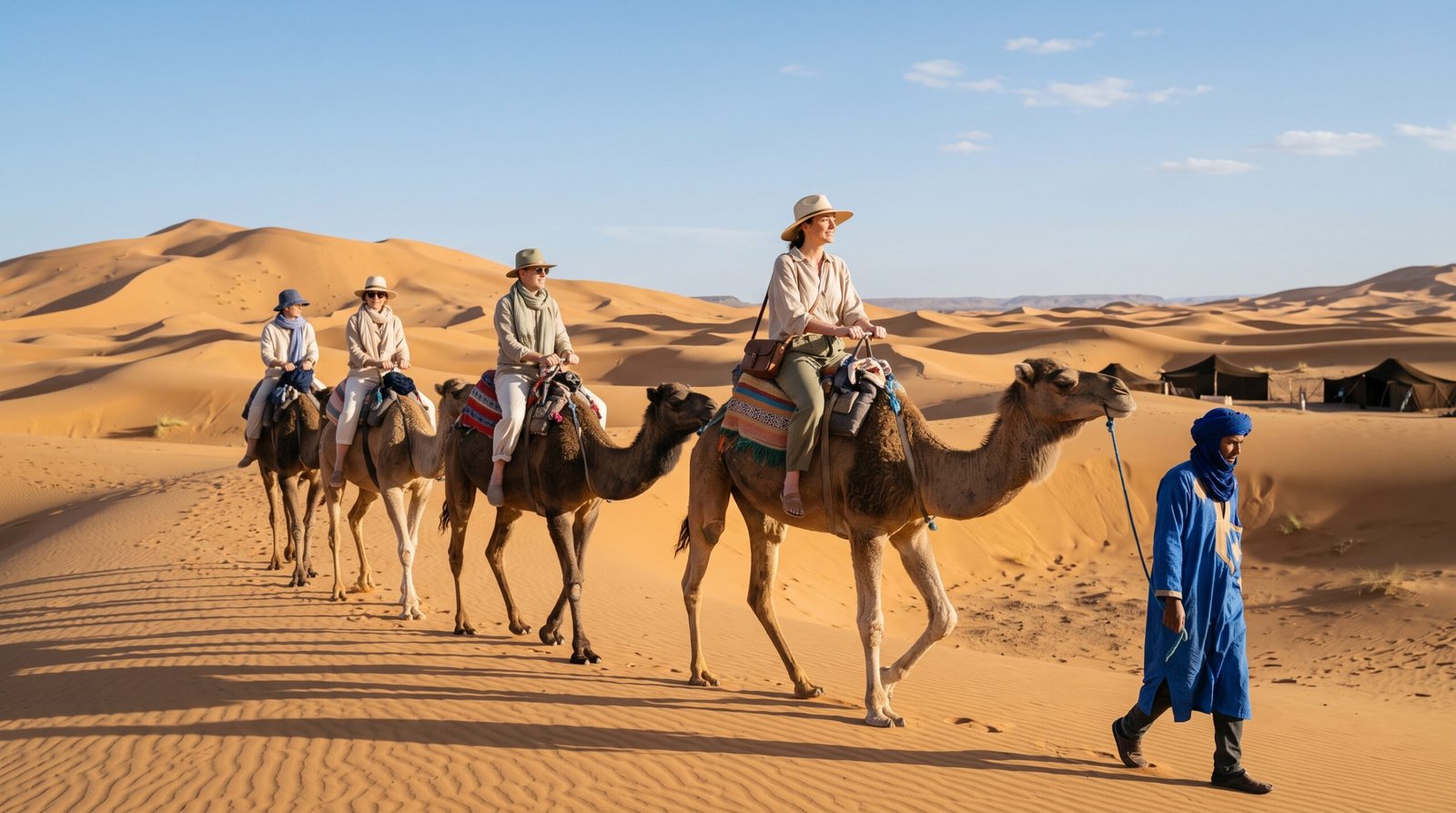
Spring is a popular period for exploring the Sahara because daytime temperatures are generally much easier to handle than during summer. March and April are particularly comfortable for camel rides, dune walks, 4x4 excursions and overnight camping.
By May, afternoon temperatures become considerably warmer, so early morning and sunset activities become more attractive.
Autumn in Merzouga: September to November
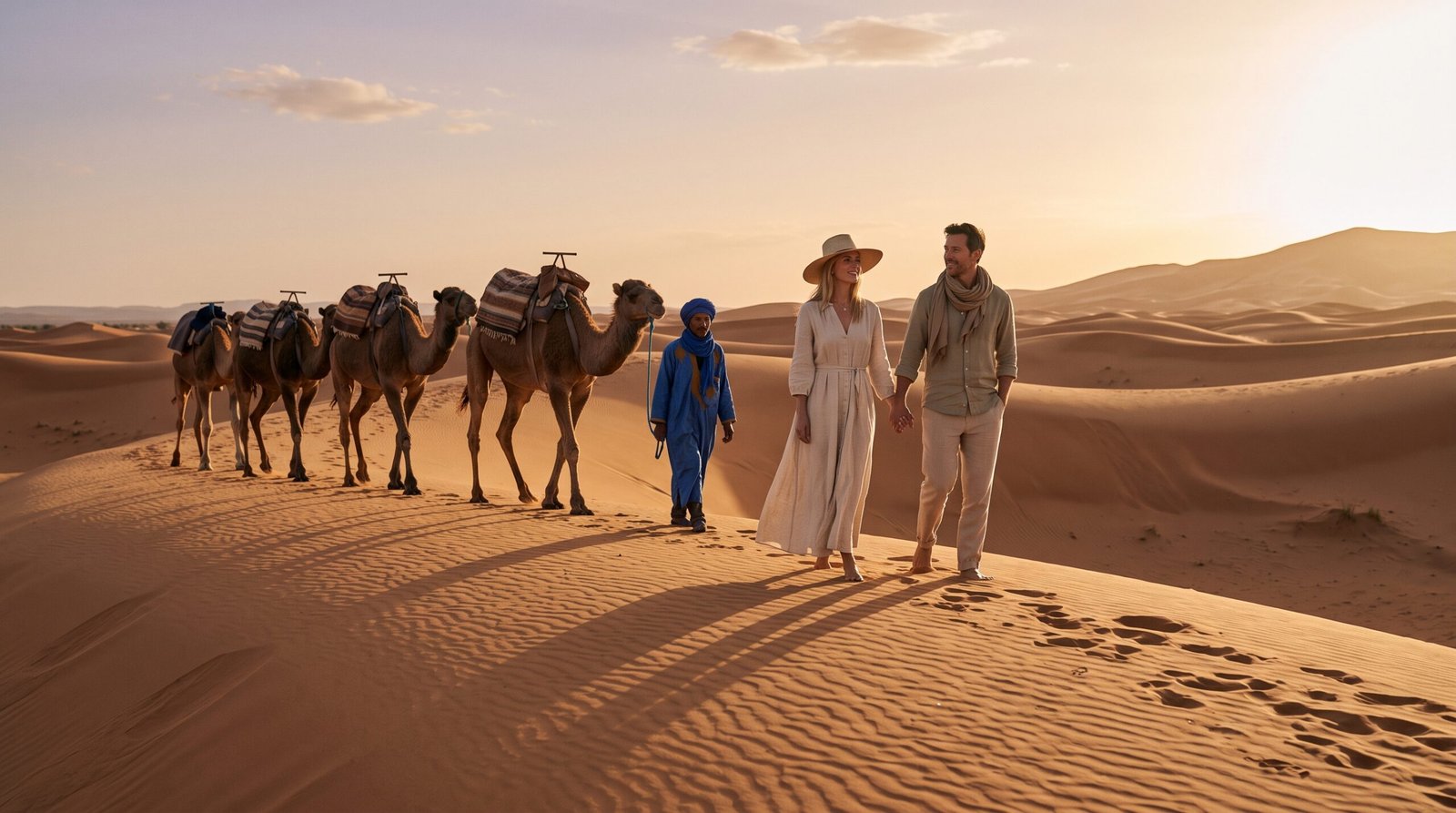
Autumn begins with warm September afternoons before temperatures become increasingly comfortable in October and November. October is particularly well suited to travelers who want to combine camel trekking, luxury desert camping and long outdoor excursions.
November is cooler, especially after sunset, so bring an additional layer for evenings in the desert.
Winter in Merzouga: December to February
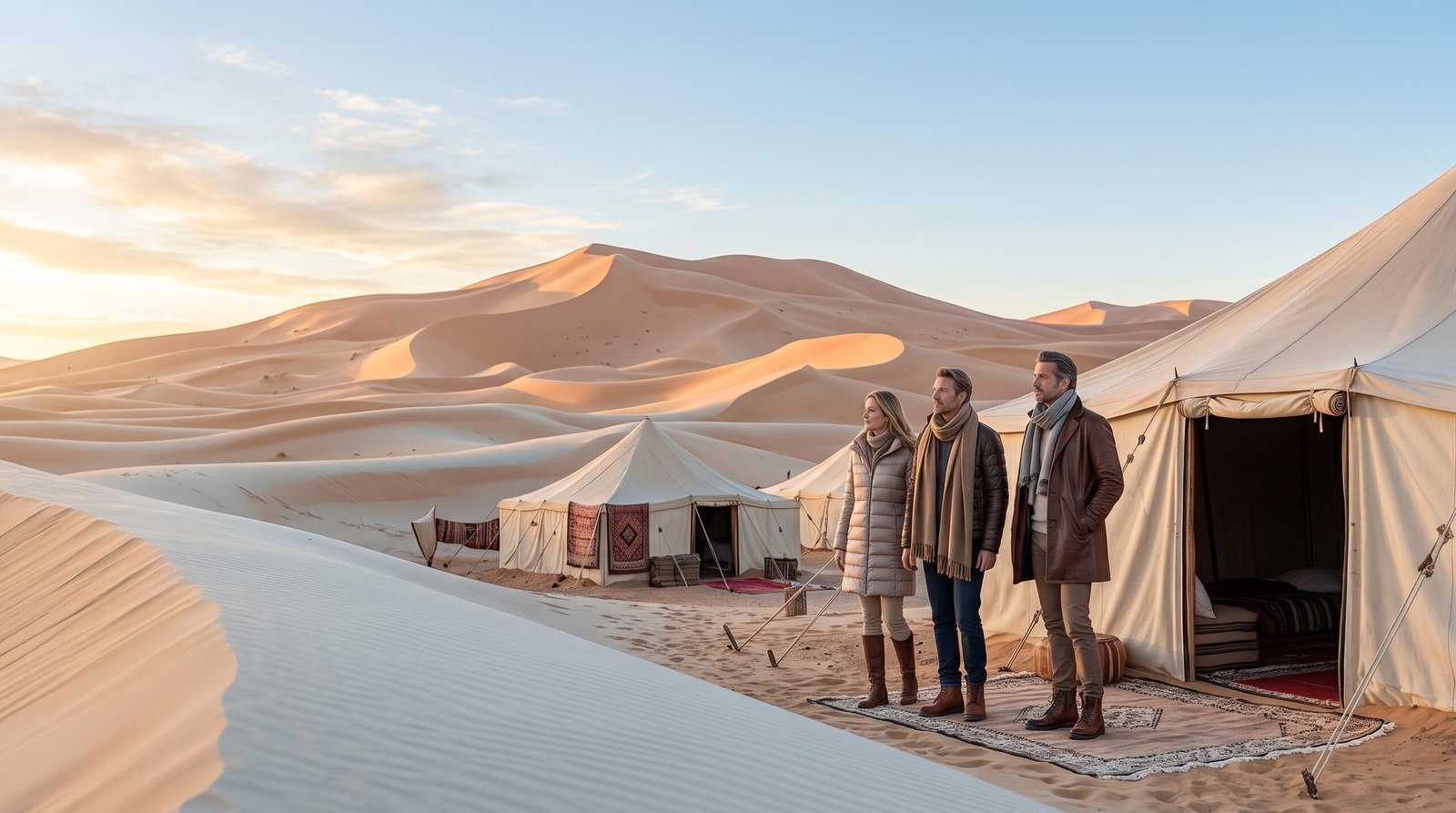
Winter days can be bright and comfortable for exploring the dunes. However, temperatures fall quickly after sunset because the desert loses heat rapidly at night.
If you are staying overnight, choose a camp with appropriate bedding, blankets and heating where available, and bring warm layers for the evening and early morning.
Summer in Merzouga: June to August
Summer is the hottest period of the year. Daytime temperatures can rise above 40°C, especially in July and August, so the daily rhythm should be adapted around the heat.
Sunrise and late-afternoon activities are generally more practical than prolonged midday excursions. A suitable camp or accommodation with effective cooling can also make a significant difference.
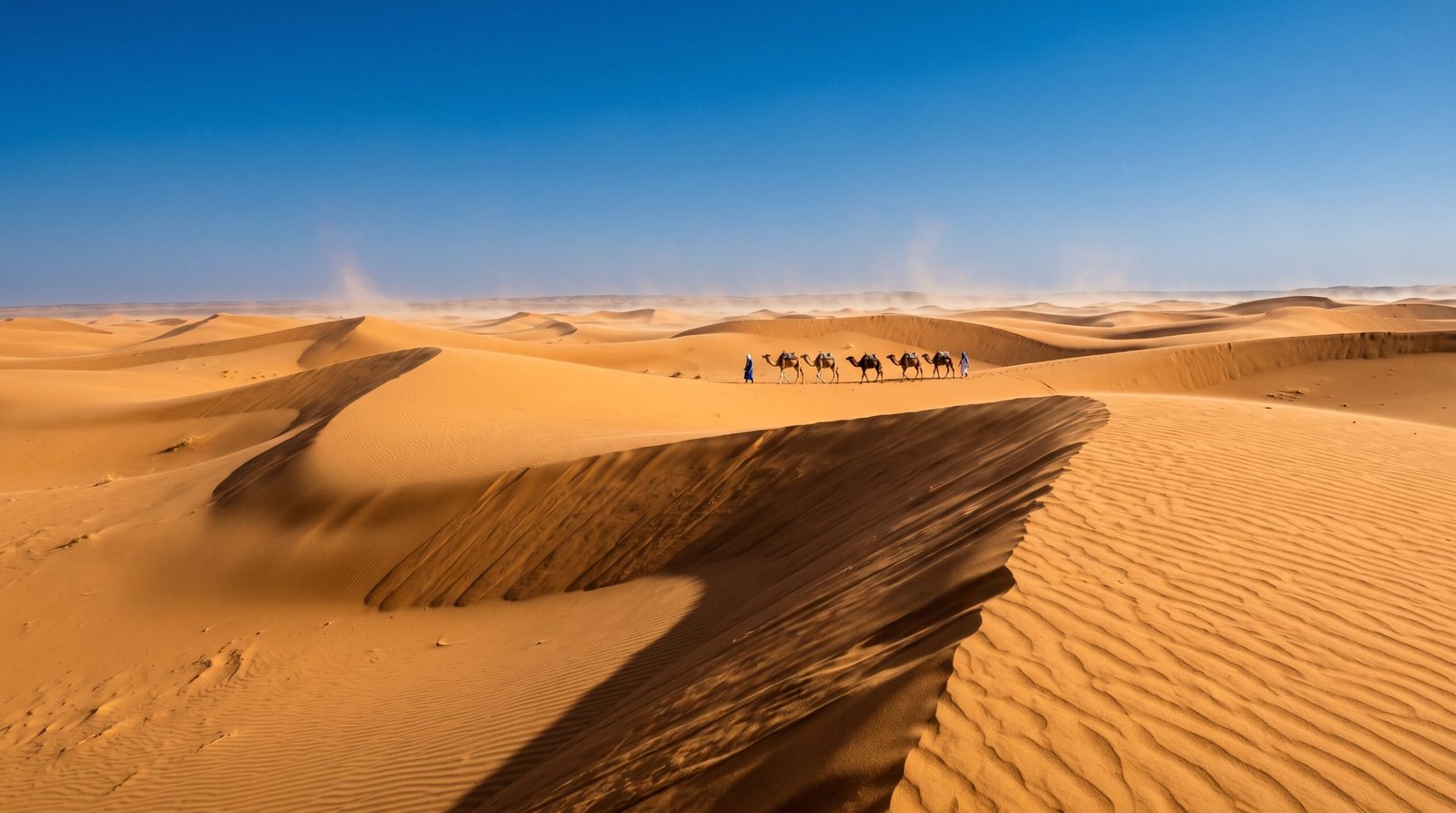
Best Time for Desert Activities in Merzouga
The ideal month can also depend on the activity you want to experience. Camel trekking, luxury camping, 4x4 excursions and stargazing each have slightly different timing considerations.
October, November, March and April generally offer comfortable conditions for camel trekking. In warmer months, sunrise and sunset rides are preferable to midday departures.
Read our complete Camel Trekking in Merzouga Guide for practical trekking information.
Cooler seasons are particularly comfortable for spending time outdoors at a desert camp. October and November offer pleasant evenings, while March and April combine warm days with comfortable nighttime conditions.
For more information, see our Merzouga Luxury Desert Camp Guide .
The cooler months make longer outdoor excursions more comfortable. During warmer periods, private 4x4 tours can still operate, but schedules are often better planned around the morning and evening.
Merzouga's remote desert environment provides excellent conditions for observing the night sky. For the darkest possible sky, plan your visit around the New Moon, when moonlight is minimal.
The best month for stargazing therefore depends not only on the season, but also on the moon phase, cloud conditions and your specific photography goals.
Experience Merzouga in Comfort with Yalla Tours
From private road journeys across Morocco to luxury desert camps, sunset camel rides and personalized Sahara experiences, our local team can organize your itinerary around your preferred travel dates.
Plan Your Custom Sahara JourneySunrise & Sunset in Merzouga: What Time Should You Go?
Sunrise and sunset are among the most memorable moments in the Erg Chebbi dunes. The exact times change throughout the year, so travelers should check the date-specific sunrise and sunset times when planning their camel trek or photography session.
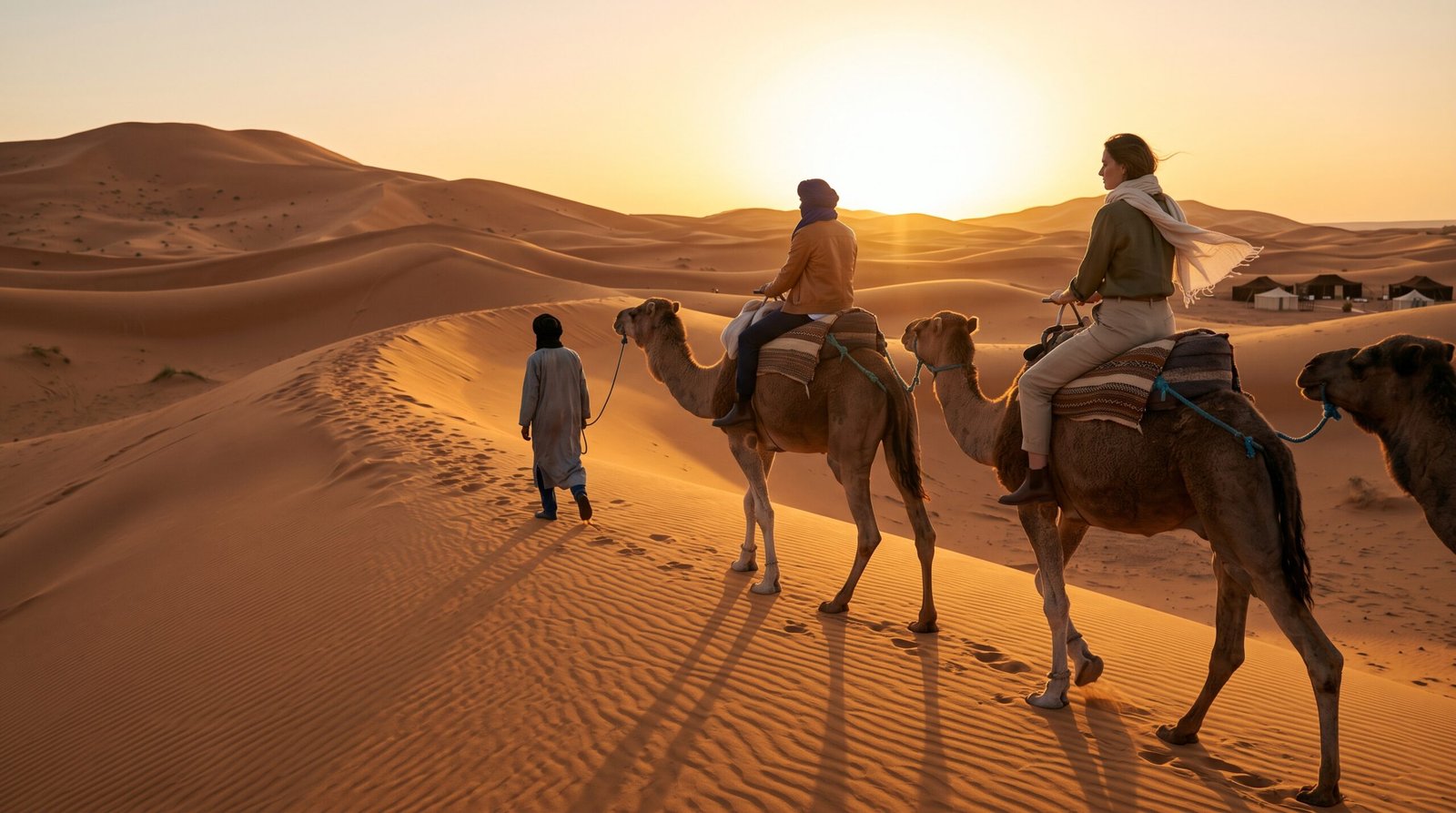
Sunrise
Sunrise camel rides and dune walks are especially useful during warmer months because temperatures are cooler in the early morning.
Sunset
Sunset is a classic time for camel trekking, photography and enjoying the changing colors across the Erg Chebbi dunes.
Summer Daylight
Summer brings longer daylight hours, but the middle of the day is also much hotter. Early morning and evening are generally more practical for outdoor activities.
If you are booking a camel excursion, ask your local operator for the exact departure time for your travel date. Local conditions, season and the type of experience can all affect the schedule.
Sandstorms, Wind & Chergui: What Travelers Should Know
Sandstorms are possible in the Sahara, but their occurrence is not guaranteed during any particular trip. Spring, especially around March and April, can bring periods of stronger wind and blowing sand. Windy conditions can also occur during other parts of the year.
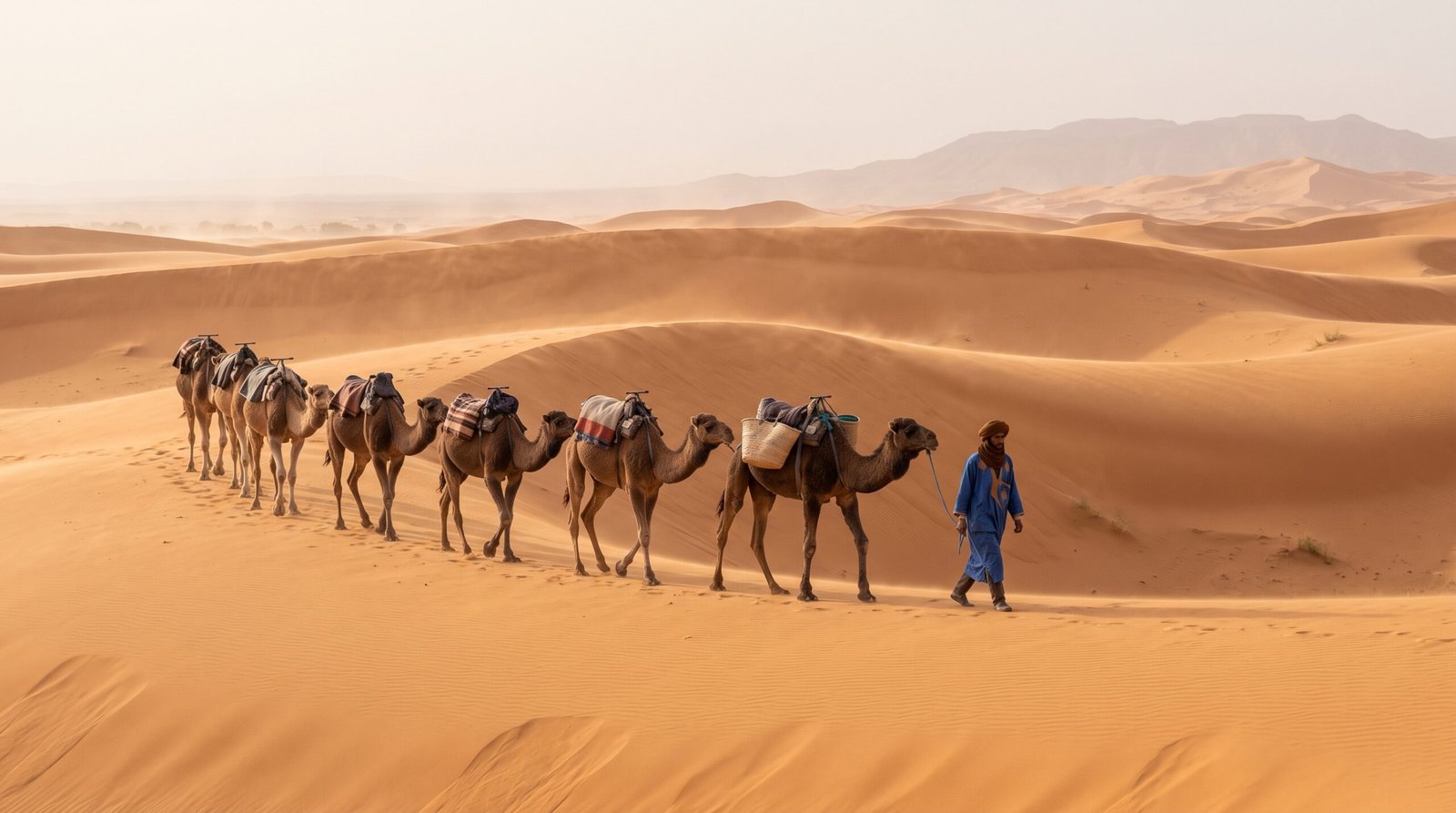
A short period of blowing sand does not necessarily mean that a complete trip needs to be cancelled. Local guides monitor conditions and can adjust activity timing when necessary.
A lightweight scarf can protect your head, neck and face from sun, wind and blowing sand.
Sunglasses can help reduce discomfort when wind carries fine sand across the dunes.
Fine desert dust can enter camera equipment, phone ports and bags. Keep electronics protected in closed pouches or dust-resistant bags.
If wind or visibility becomes problematic, your local driver or guide can adjust the timing or location of an excursion.
Best Time for Stargazing & Milky Way Photography in Merzouga
One of the advantages of spending a night in the Sahara is the opportunity to experience a much darker sky away from major urban areas. Merzouga and the surrounding Erg Chebbi dunes can provide excellent conditions for observing stars on clear nights.
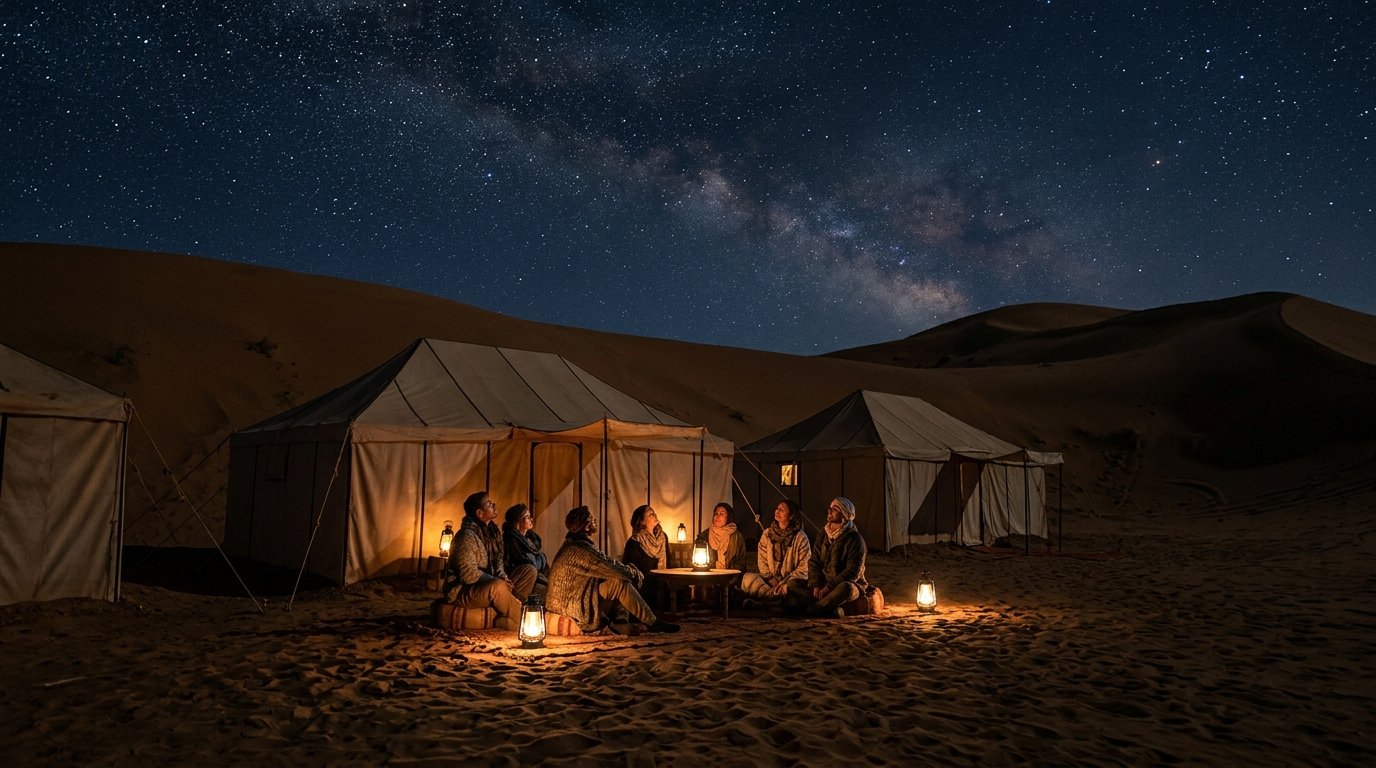
New Moon vs. Full Moon
The moon phase has a major effect on how dark the sky appears. Around a New Moon, there is little natural moonlight, making more faint stars visible. Around a Full Moon, the bright moon can illuminate the dunes beautifully but makes faint stars harder to see.
If your priority is astrophotography or seeing as many faint stars as possible, check the lunar calendar before choosing your travel dates. The best period also depends on the seasonal visibility of the Milky Way and the exact time of night.
Ask your camp or local guide about the best nearby location for reducing artificial light and finding an unobstructed view of the sky.
Is Merzouga Too Hot to Visit in Summer?
Merzouga can be visited during summer, but July and August are significantly hotter than the rest of the year. Daytime temperatures can rise above 40°C, making prolonged outdoor activity during the hottest part of the afternoon uncomfortable.
If summer is the only period available for your trip, adjust the itinerary around the heat rather than trying to follow a typical spring or autumn schedule.
Start Early
Plan camel rides, dune walks and other outdoor activities around sunrise whenever possible.
Rest During Peak Heat
Use the hottest part of the afternoon for indoor, shaded or air-conditioned activities.
Stay Hydrated
Carry sufficient water and use sun protection during outdoor excursions.
Choose Suitable Accommodation
If traveling in peak summer, check what cooling facilities are actually available in your selected camp before booking.
How Cold Does Merzouga Get at Night?
Desert temperatures can change dramatically after sunset. During winter, nighttime temperatures can approach freezing, while spring and autumn nights are generally much milder. Even during warmer months, the desert can feel noticeably cooler after sunset than during the afternoon.
If you are visiting between November and February, bring warm layers and ask your camp about the bedding and heating available inside the tents.
Luxury camps may provide additional blankets and heating, but facilities differ between properties, so confirm what is included before booking.
What to Wear & Pack for Merzouga by Season
Packing for the Sahara means preparing for both strong daytime sun and cooler evenings. Your exact packing list should depend on the month of travel and the activities included in your itinerary.
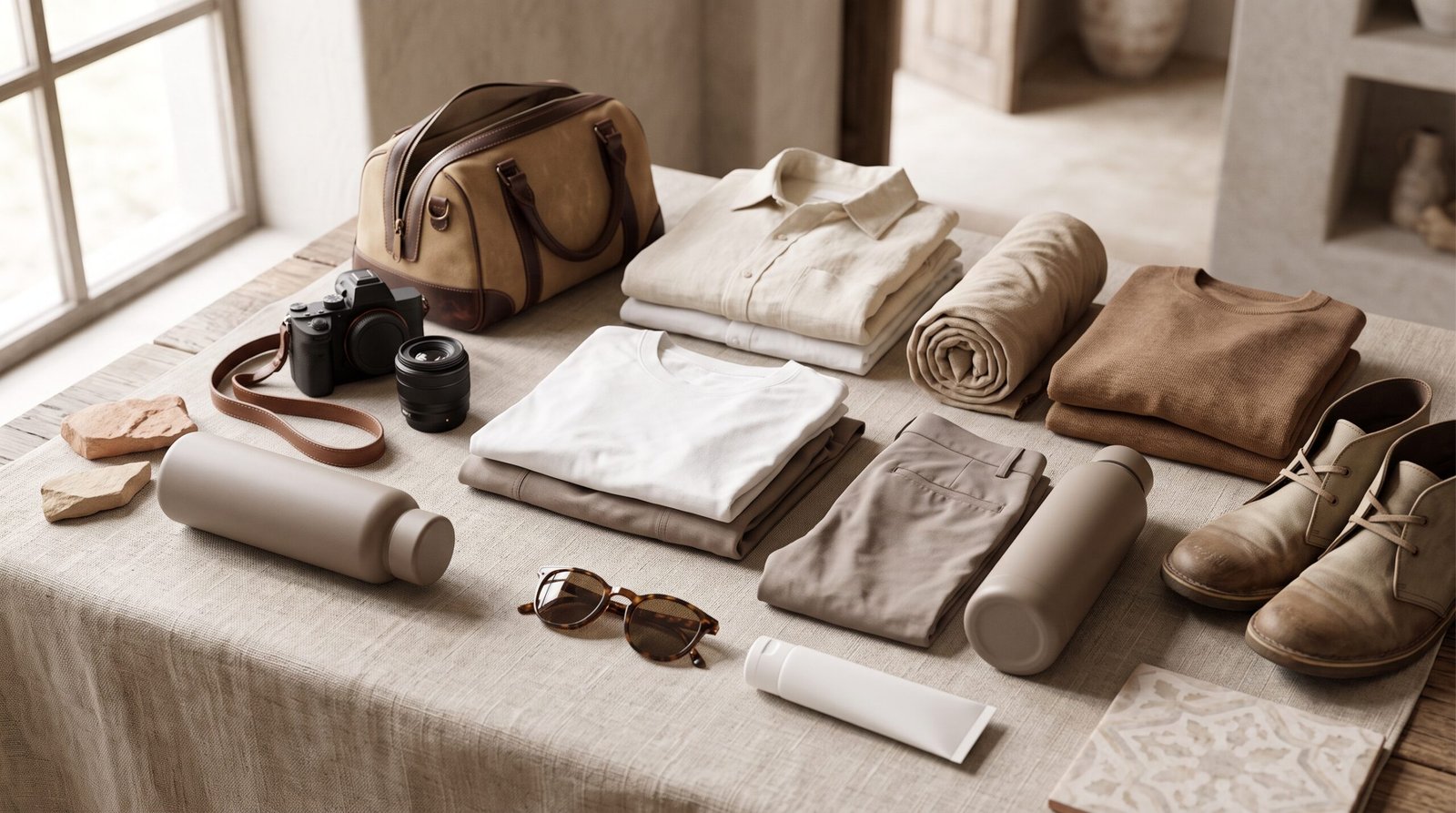
For a broader Morocco packing strategy, see our Morocco Packing List Guide .
Useful for sun, wind and blowing sand throughout the year.
Pack breathable trousers, cotton or linen clothing, comfortable walking shoes, sunglasses, sunscreen and a light sweater or jacket for the evening.
Choose lightweight breathable clothing, sun protection, sunglasses, a hat or scarf and comfortable closed-toe footwear.
Bring a warm jacket, thermal layers, thick socks, warm sleepwear and an additional layer for early mornings and evenings.
Keep phones, cameras, lenses and charging ports protected from fine desert dust and sand.
How Long Does It Take to Get From Tangier to Merzouga?
Merzouga is in southeastern Morocco, while Tangier is in the country's north. Traveling between the two destinations is therefore a long-distance journey rather than a simple day transfer.
For travelers starting in Tangier, turning the journey into a multi-day private itinerary can allow time to experience Morocco's changing landscapes along the way, including the Rif Mountains, Fes, the Middle Atlas and the Ziz Valley.
A Scenic Multi-Day Route
A sample itinerary can include:
Day 1: Tangier to Chefchaouen and onward toward Fes.
Day 2: Explore Fes and continue toward the Middle Atlas
depending on the itinerary.
Day 3: Cross the Middle Atlas, travel through the Ziz
Valley and reach Merzouga.
Day 4: Enjoy sunrise, desert activities and your
selected Sahara experience.
For a complete private itinerary and route options, explore our Tangier to Merzouga Private Tour .
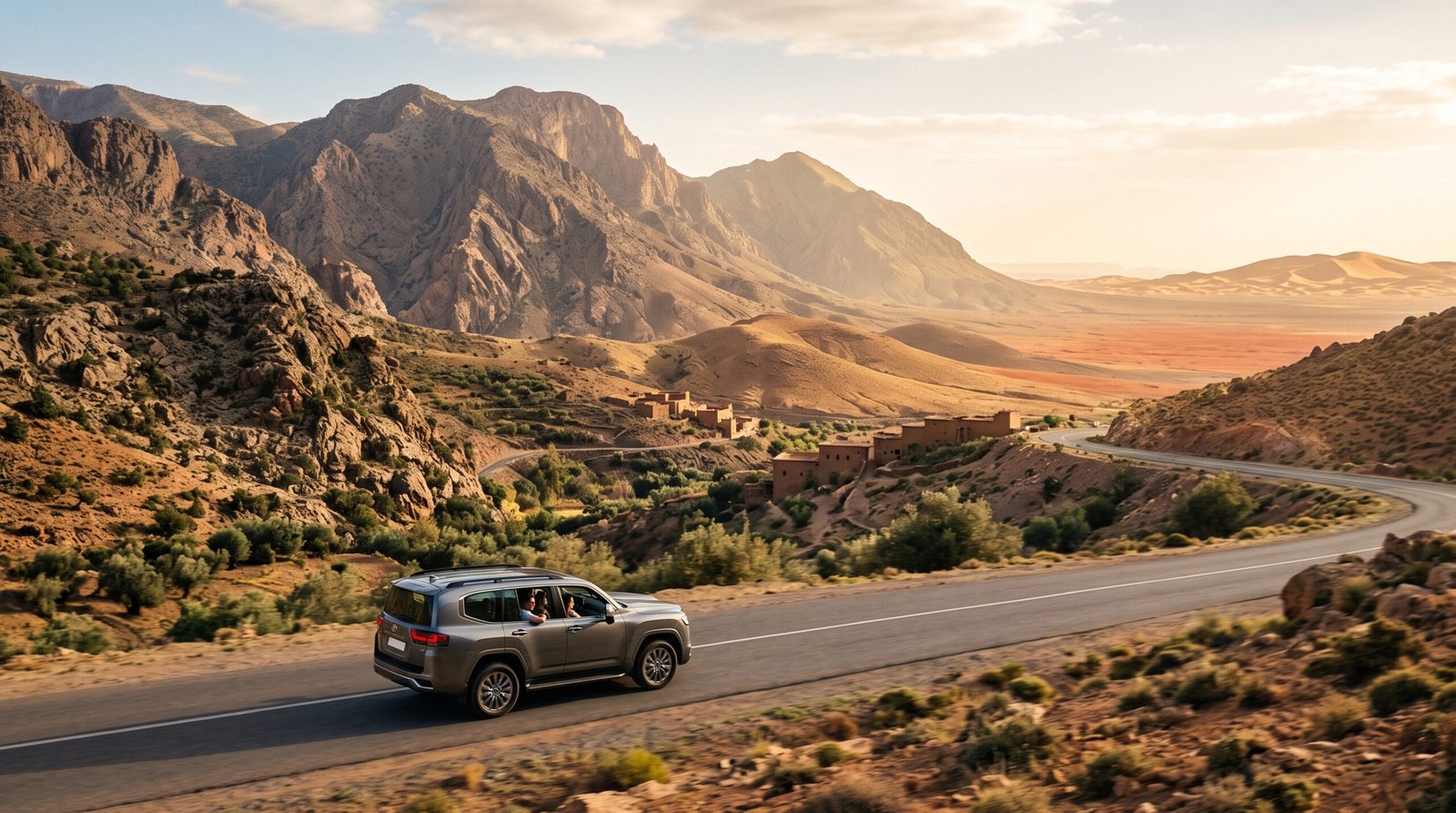
Explore our guide to Merzouga Sahara Desert Activities for camel trekking, 4x4 desert excursions, quad biking, sandboarding, cultural experiences and other things to do around Erg Chebbi.
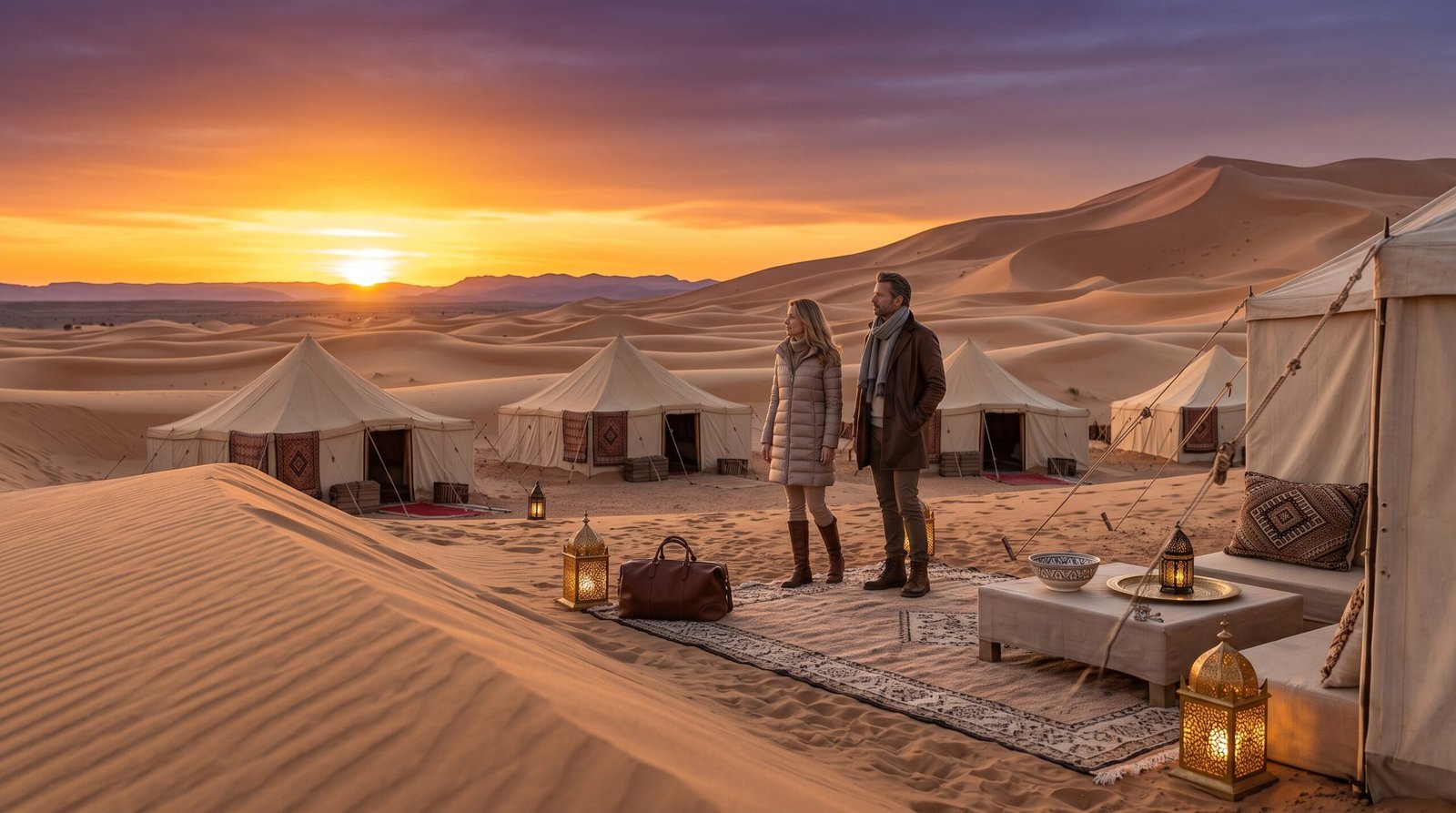
Read our Merzouga Luxury Desert Camp Guide to learn more about luxury desert camping, accommodation features and planning an overnight Sahara experience.
Best Things to Do in Merzouga During Your Visit
The season you choose can influence which desert activities are most comfortable. Popular experiences include camel trekking at sunset or sunrise, exploring the dunes by 4x4, sandboarding, visiting local communities and spending a night at a desert camp.
For a complete activity-by-activity guide, visit our Best Things to Do in Merzouga and Erg Chebbi Guide .
Frequently Asked Questions About Visiting Merzouga
What is the coldest month in Merzouga?
January is generally among the coldest months in Merzouga. Daytime temperatures can remain mild, but nighttime temperatures can fall close to freezing during particularly cold periods.
What is the hottest month in Merzouga?
July is typically one of the hottest months, with average daytime temperatures around 40°C or higher. August is also extremely hot, so summer visitors should plan outdoor activities around sunrise and sunset.
Is Merzouga cold at night?
It can be. Winter nights can become very cold and may approach freezing, while spring and autumn evenings are generally more moderate. Even in warmer months, temperatures can feel considerably cooler after sunset.
Can you visit Merzouga during Ramadan?
Yes. Merzouga remains a destination for travelers during Ramadan. However, daily schedules may be adapted around fasting and sunset meals, so travelers should confirm meal and activity timings with their accommodation or tour operator in advance.
Does it ever rain in Merzouga and Erg Chebbi?
Yes, although rainfall is limited because Merzouga has a very dry desert climate. Short periods of rain can occur, including during months that are otherwise predominantly dry.
What is the best month for stargazing in Erg Chebbi?
Stargazing can be excellent throughout the year on clear nights. Instead of choosing a single month, travelers interested in very dark skies should pay particular attention to the New Moon phase and local weather conditions.
How many nights should I spend in Merzouga?
A stay of two nights gives many travelers enough time to experience sunset and sunrise in the dunes, enjoy a desert camp and explore additional activities without rushing. Longer stays can be useful for travelers who want a slower itinerary.
What should I wear for camel trekking in the dunes?
Wear comfortable loose trousers, breathable clothing, closed-toe shoes, sunglasses and sunscreen. A lightweight desert scarf or cheche is also useful for protection from sun and blowing sand.
Is October a good time to visit Merzouga?
October generally offers a comfortable combination of warm daytime temperatures and cooler evenings, making it suitable for camel trekking, desert camping, dune walks and other outdoor activities.
Is April a good time to visit Merzouga?
April is generally a comfortable spring month in Merzouga. Temperatures are warm enough for outdoor activities without the extreme heat associated with the peak summer months.
Experience the Magic of Merzouga with Yalla Tours
Whether you are looking for a private Tangier to Merzouga journey, a sunset camel ride, a luxury desert camp or a tailored Sahara itinerary, our local team can help organize your experience around your preferred travel dates and interests.